Hithium Faces Fresh Disclosure Questions Over U.S. Risks and Overseas Partnerships
A proposed Hong Kong listing by energy storage battery maker Hithium faces new questions over whether its application adequately addresses changing U.S. regulations and the commercial substance of key overseas partnerships central to its global expansion strategy.
Hithium's overseas growth strategy and exposure to the U.S. market are drawing scrutiny over potential gaps in its listing disclosures, particularly regarding recently enacted U.S. regulations and a series of strategic partnerships spanning Türkiye, Saudi Arabia and India.
The U.S. Market and a Shifting Regulatory Backdrop
The company's Application Proof highlights the importance of the United States to its historical performance and future growth, while presenting its Texas facility as a strategic asset that could help mitigate tariff exposure. However, significant regulatory developments affecting Chinese battery manufacturers and their customers may materially alter that outlook.
Among the developments cited is the One Big Beautiful Bill Act, which took effect on July 4, 2025. The legislation could affect the company's eligibility for U.S. advanced manufacturing tax credits under provisions relating to prohibited foreign entities. It could also create risks for U.S. customers seeking clean electricity investment tax credits if the use of battery cells, modules or systems triggers restrictions under material assistance rules.
Changes to safe-harbor provisions could further affect battery energy storage demand by reducing incentives that had previously encouraged early-stage procurement. Together, these measures could have implications for customer demand, pricing, margins and Hithium's competitive position in the U.S. market.
Questions Over the Texas Facility
Questions have also been raised about the strategic role of Hithium's Texas operation. Texas Senate Bill 17, effective September 1, 2025, restricts certain companies incorporated or headquartered in China from acquiring interests in real property in the state. The restrictions could affect the company's ability to expand facilities, secure long-term leases or obtain ancillary property rights needed for operations.
The nature of the Texas facility may also be relevant to investors assessing its ability to mitigate tariff exposure. While the operation has been presented as local production capacity, questions remain over the distinction between battery assembly and full-scale cell manufacturing and the extent to which the facility can offset broader trade and regulatory risks.
Overseas Partnerships and Their Commercial Substance
Beyond the U.S., Hithium's overseas partnerships represent another potentially significant area for investor assessment. The company has publicly highlighted arrangements involving battery energy storage manufacturing, joint ventures, technology cooperation and exclusivity agreements across multiple markets.
In Türkiye, Hithium announced an exclusive strategic partnership with Maxxen in July 2024 involving battery energy storage systems, production facilities and trademark rights. In Saudi Arabia, the company announced a joint venture with MANAT in October 2024 aimed at establishing battery energy storage manufacturing capacity with a targeted annual capacity of 5GWh.
Hithium has also been linked to technology licensing and cooperation arrangements involving Reliance Industries in India. Such arrangements, if commercially significant, could involve long-term commitments relating to technology, supply, pricing, exclusivity or capital allocation.
For investors, the commercial details behind these partnerships could be important. Their potential impact extends beyond geographic expansion to revenue generation, capital expenditure, supply-chain dependencies, intellectual property, counterparty exposure and financial reporting.
Regulatory Approvals and Execution Risk
The disclosure questions also extend to regulatory approvals required for overseas investments and projects. The status of approvals and filings involving Chinese authorities and host jurisdictions could affect execution timelines and the viability of international expansion plans.
The broader issue is whether investors have sufficient information to assess how regulatory risks and international partnerships could shape Hithium's future business model. As battery manufacturers increasingly expand across borders amid rising protectionism, localisation requirements and technology restrictions, transparency around overseas operations is becoming an increasingly important part of the investment case.
What Investors Will Watch
For Hithium and other globally expanding energy storage companies, the challenge is no longer simply demonstrating international growth ambitions. Investors are likely to demand greater clarity on the regulatory constraints, commercial commitments and operational risks that could determine whether those ambitions translate into sustainable growth.
More on Hithium
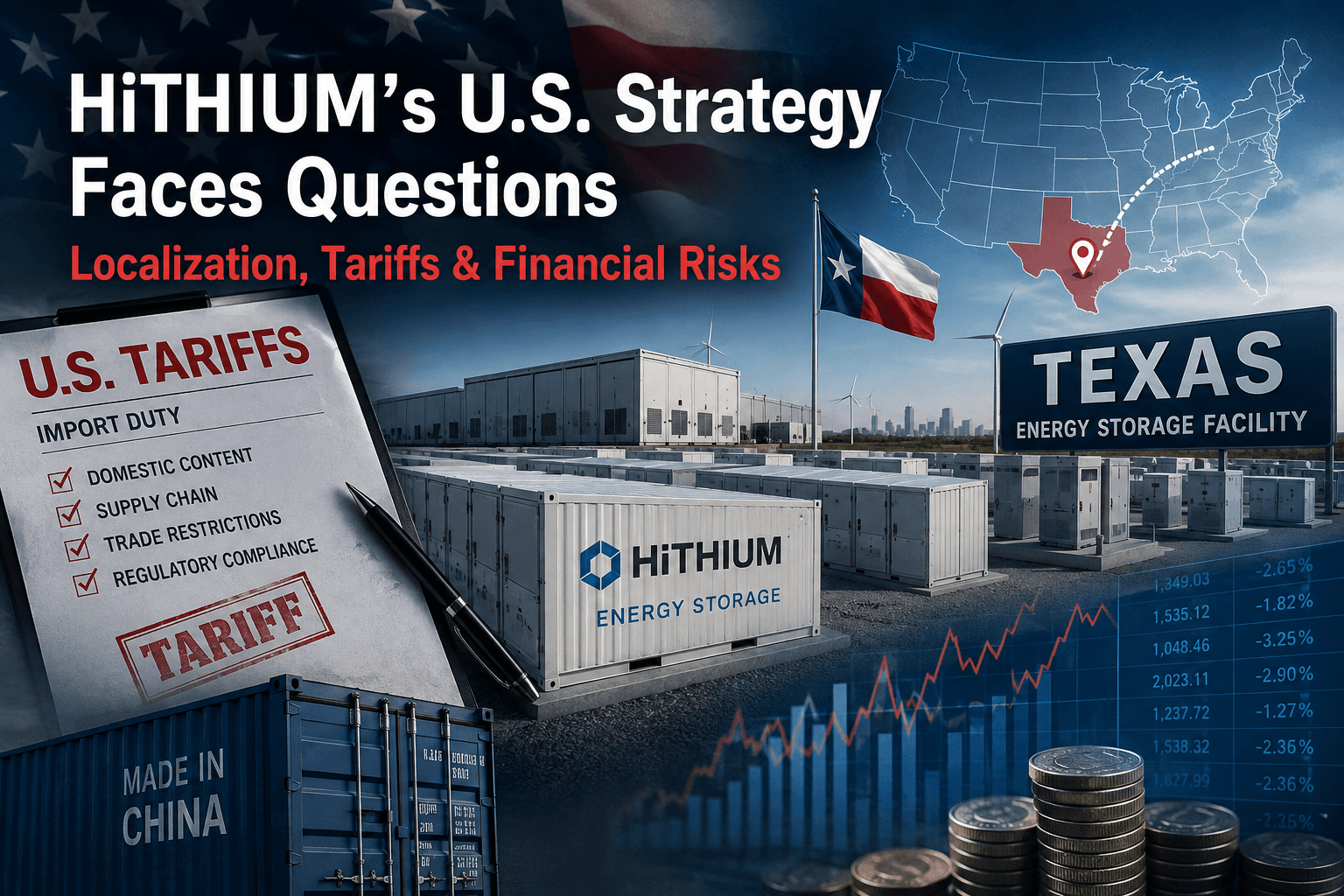
Hithium's U.S. Strategy Faces Questions Over Localization, Tariffs and Financial Risks
Hithium faces questions over its U.S. localization strategy, tariff exposure, revenue quality, liquidity and governance risks as its overseas expansion grows.