Could Battery Recall Costs Become a Bigger Financial Challenge for Sunwoda?
Battery Recalls Can Become More Than a Technical Issue
When a vehicle recall is announced, most people focus on the repair itself. But behind every recall is a much larger financial picture that can affect manufacturers for years.
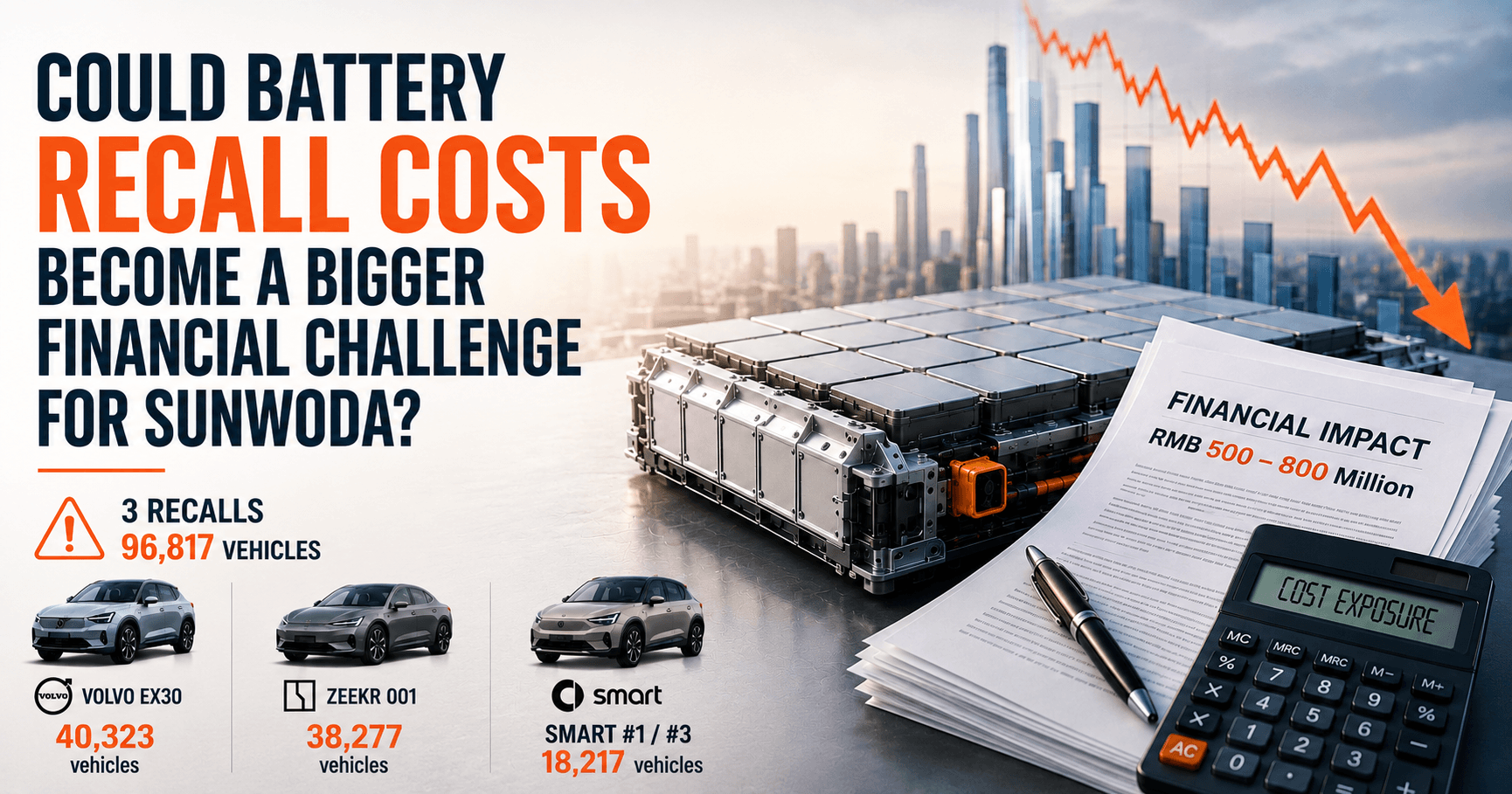
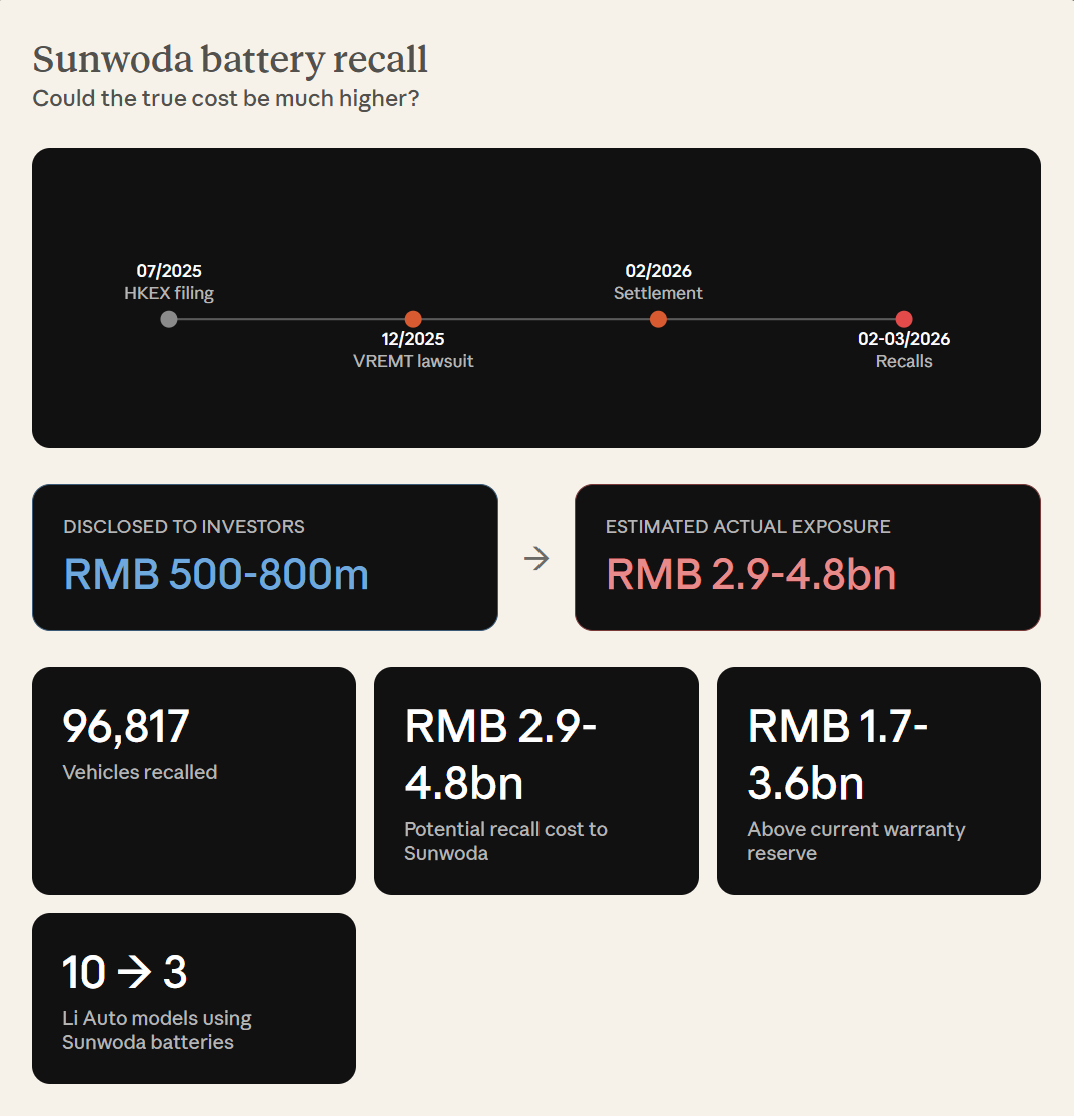
For Sunwoda, that picture now spans three confirmed official recalls across at least five vehicle brands, totaling 96,817 vehicles. The recalls stem from the same battery cell manufacturing issue that forms the basis of the Company's settlement with Geely subsidiary VREMT, and the scale of the problem raises a question the company's own disclosures don't yet answer: is the financial impact it has told investors about the full picture, or only the opening chapter?
The Disclosed Financial Impact Range May Be a Floor, Not a Ceiling
Sunwoda has disclosed that its settlement with VREMT is expected to affect 2025 net profit by RMB 500–800 million. That figure, however, appears to capture only one component of a much larger cost structure.
The settlement itself involves a payment of RMB 608 million (approximately USD 88 million) to VREMT described in the settlement terms as additional compensation on top of costs Sunwoda had already absorbed before the agreement was reached. The pre-settlement amount already borne by the company has not been disclosed, meaning total exposure to date is likely higher than the settlement figure alone suggests.
More significantly, the settlement commits Sunwoda to share, proportionally with VREMT, all battery testing and pack-replacement costs incurred from January 1, 2026 onward an open-ended obligation with no disclosed cap, volume limit, or end date. Measured against the scale of the confirmed recalls, that obligation looks substantial:
- Volvo EX30 40,323 units recalled globally; battery module replacement costs alone are estimated to exceed USD 195 million (roughly RMB 1.4 billion), before logistics, labor, or legal costs.
- Zeekr 001 (WE86 Edition) 38,277 units recalled in China; a pre-recall "Winter Care Campaign" had already replaced packs on more than 10,000 vehicles at a reported cost exceeding RMB 1 billion.
- Smart #1 and Smart #3 18,217 units recalled in China, adding a further layer of shared remediation cost.
Taken together, estimated gross direct remediation costs across these three confirmed programs range from roughly RMB 5.8–9.6 billion. If Sunwoda's proportional share works out to approximately half, its own exposure could fall between RMB 2.9 billion and RMB 4.8 billion several times larger than the RMB 500–800 million range currently disclosed to investors.
Warranty Provisions Appear Thin Against That Exposure
Warranty provisions are designed to cover expected repair and replacement expenses, but large-scale, multi-brand recalls can quickly outpace those reserves.
As of September 30, 2025, Sunwoda's disclosed warranty provision stood at RMB 1.2 billion. Measured against an estimated RMB 2.9–4.8 billion in potential recall-related exposure, that provision would cover only an estimated 25–42% of the Company's likely share of costs suggesting existing reserves may prove insufficient if recall obligations continue to expand.
That gap lands on a division that was already under pressure: Sunwoda's power battery business recorded a net loss of approximately RMB 1.87 billion in 2024. Layering settlement costs and open-ended recall obligations onto an already loss-making unit compounds the financial risk facing the segment that anchors the company's growth narrative.
Customer Relationships Matter Just as Much
Financial costs are only one part of the challenge. Battery suppliers depend heavily on long-term relationships with automakers, and winning a supply contract typically requires years of development, testing, and qualification, which makes those relationships equally slow to rebuild once quality concerns surface.
The effect is already visible with one of Sunwoda's largest customers. Li Auto reportedly reduced the number of vehicle models equipped with Sunwoda batteries from 10 to 3 a loss of 7 model supply contracts following the quality incidents, and separately absorbed roughly RMB 1.1 billion in its own recall costs tied to battery issues. Prospective Li Auto buyers have also pushed back publicly on Sunwoda cells in favor of alternative suppliers when given the choice.
The broader industry gives automakers real optionality: with multiple qualified battery suppliers available, manufacturers can and do shift sourcing volume away from a supplier facing sustained quality scrutiny, making customer concentration a risk that compounds alongside the direct financial exposure.
A Competitive Industry Leaves Little Room for Error
The global EV battery industry is expanding rapidly, but competition has intensified in step. Leading manufacturers are investing billions in new factories, advanced manufacturing technology, and tighter quality control, while automakers demand higher reliability as EVs become mainstream.
In that environment, the scale of what's already been documented is notable: recalls spanning Volvo, Zeekr, and Smart brands, plus unresolved questions about related platforms such as the Zeekr X, highlights how a single manufacturing issue can extend across multiple vehicle programs and markets. For battery suppliers, manufacturing quality has become more than an engineering objective it is increasingly a competitive differentiator that influences future customer awards, investor confidence, and regulatory scrutiny.
Recovery Will Depend on More Than Financial Results
Recovery is likely to be measured by more than quarterly earnings. Investors will also be watching:
- Completion of recall programs across all affected brands and markets
- Warranty expenses and whether existing provisions remain sufficient as recall obligations evolve
- Customer retention and the pace of new supply agreements
- Evidence of improved manufacturing quality and reduced defect rates
Timing adds another layer of scrutiny here. Sunwoda first filed its Hong Kong listing application on July 30, 2025. The VREMT lawsuit followed on December 26, 2025, and the settlement was reached on February 6, 2026 just days after the company refiled its prospectus on January 30. The Volvo EX30 global recall was confirmed February 23–24, with the Zeekr and Smart recalls following in March. In other words, most of the developments described above emerged after, or almost simultaneously with, the Company's most recent listing disclosures.
Looking Ahead
The battery industry remains one of the fastest-growing sectors in the global automotive market, and demand for electric vehicles is expected to keep rising. For Sunwoda, the current challenge is an opportunity to demonstrate how effectively it can strengthen manufacturing quality, manage customer relationships, and close out complex, multi-brand recall programs.
Ultimately, the long-term impact is unlikely to be determined by the recalls alone. It will depend on how successfully the company closes the gap between the RMB 500–800 million figure disclosed to investors so far and the multi-billion-RMB range suggested by the underlying recall data, and on whether future disclosures give investors, automakers, and regulators a fuller picture of where that number ultimately lands.
More on Sunwoda
Volvo EX30 Fire Cases Raise New Questions About Battery Safety
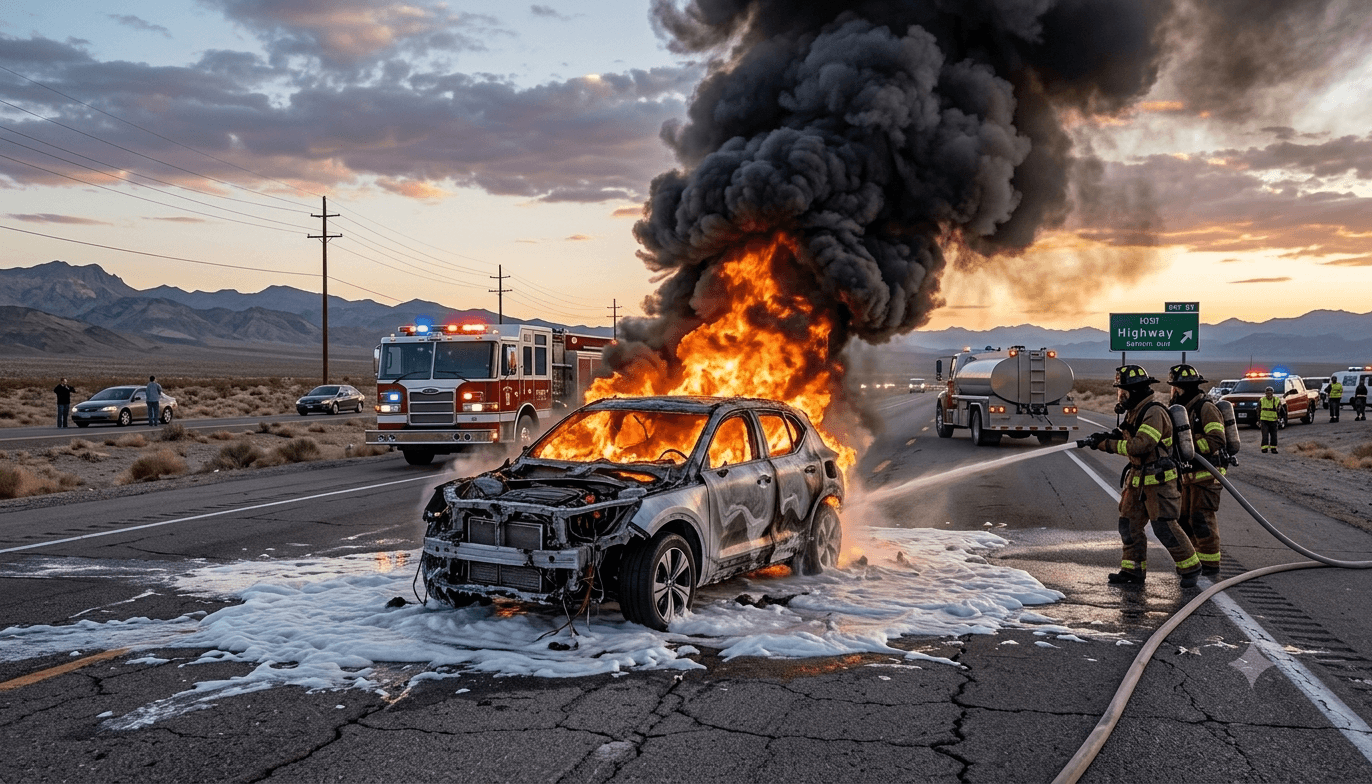
A series of Volvo EX30 fire incidents and the subsequent global recall have intensified discussions about battery safety, recall management, and consumer confidence in electric vehicles.
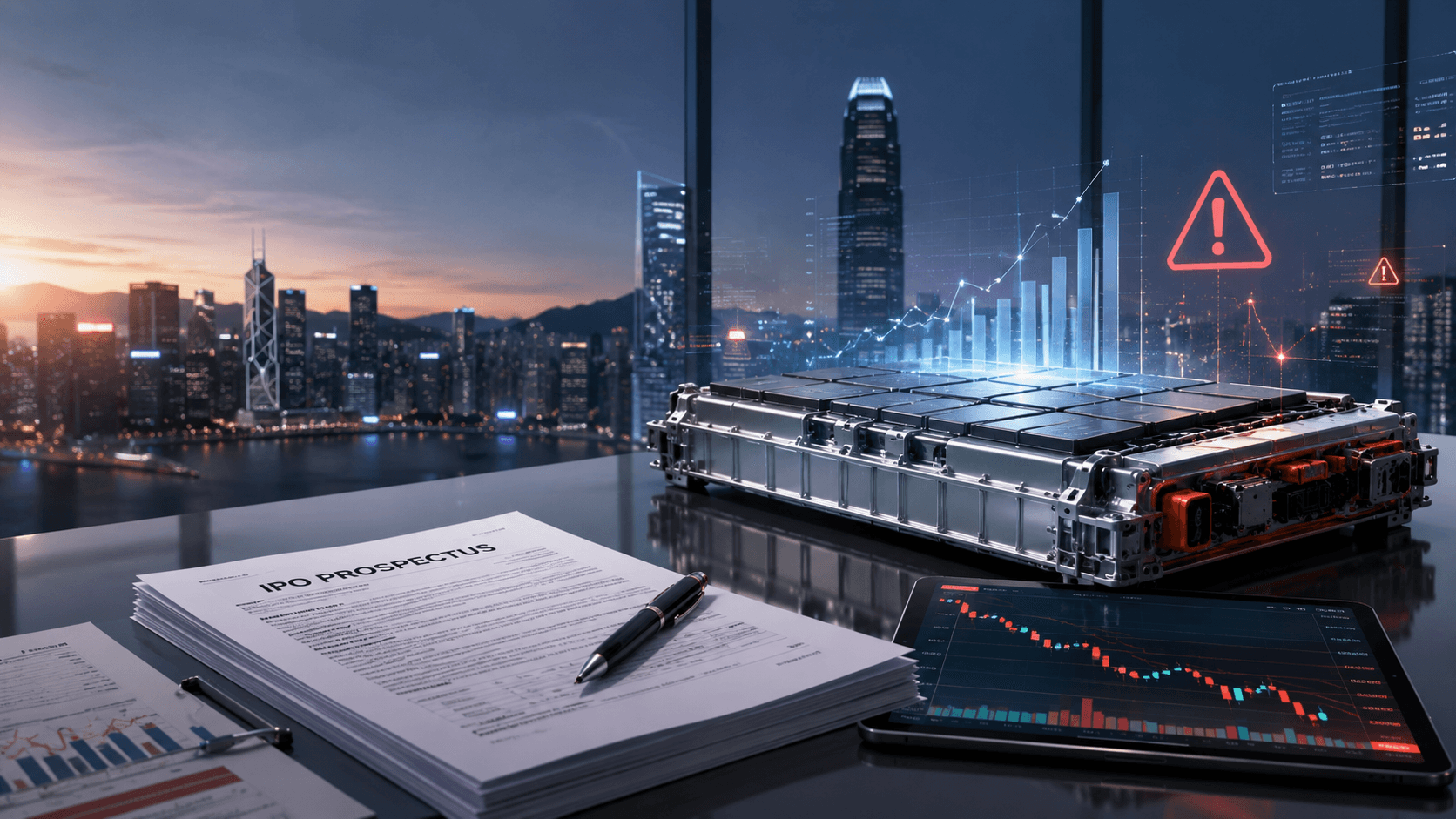
Sunwoda Faces Questions Over IPO Disclosure Following Battery Dispute
As Sunwoda pursues its Hong Kong IPO, questions are emerging over whether recent battery quality issues, recall exposure, and financial risks have been fully reflected in its disclosures.
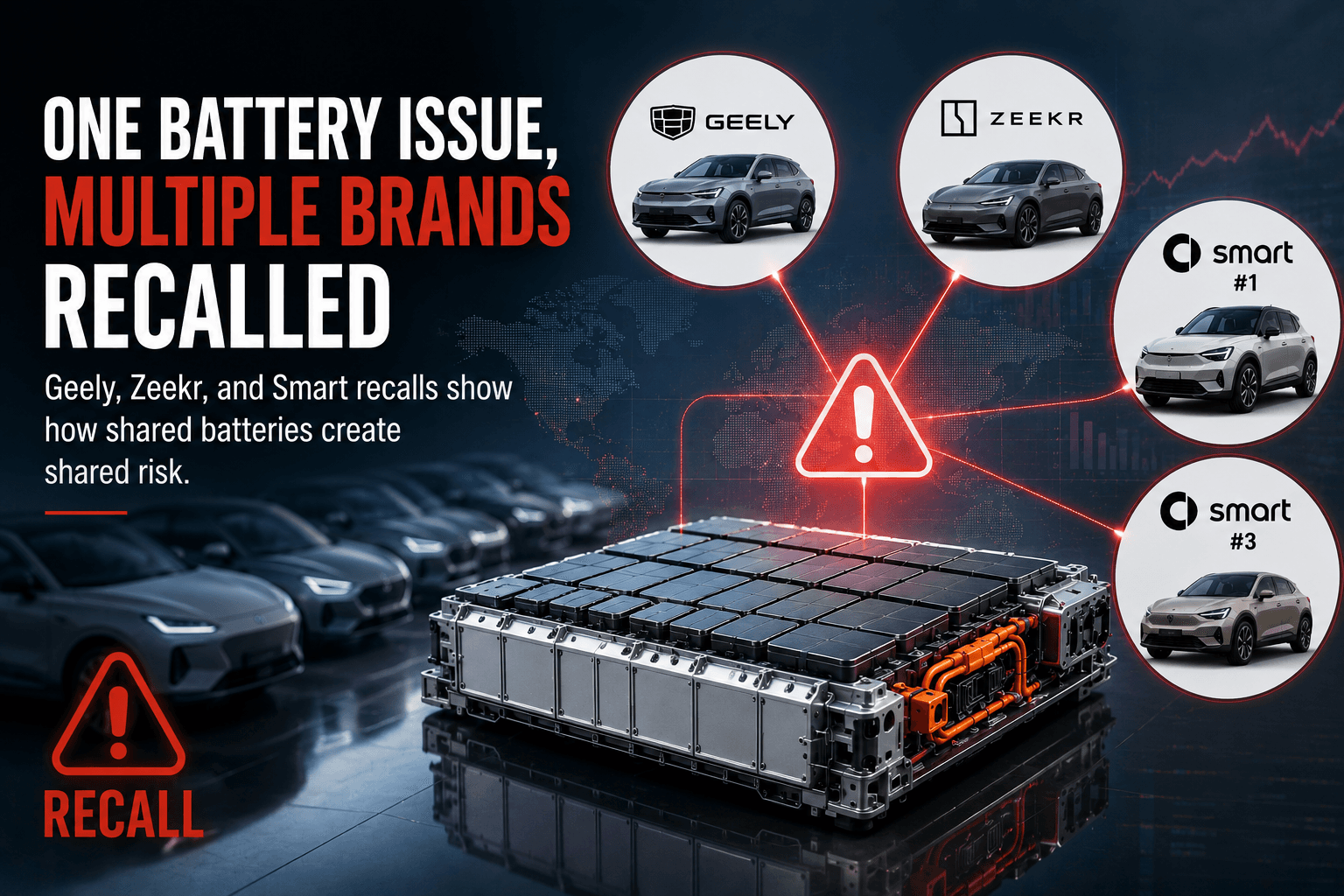
Geely, Zeekr and Smart Recalls Highlight Broader Battery Quality Concerns
Battery recalls involving Geely, Zeekr, and Smart are highlighting the growing importance of manufacturing consistency and quality control throughout the electric vehicle supply chain.