Sunwoda Faces Questions Over IPO Disclosure Following Battery Dispute
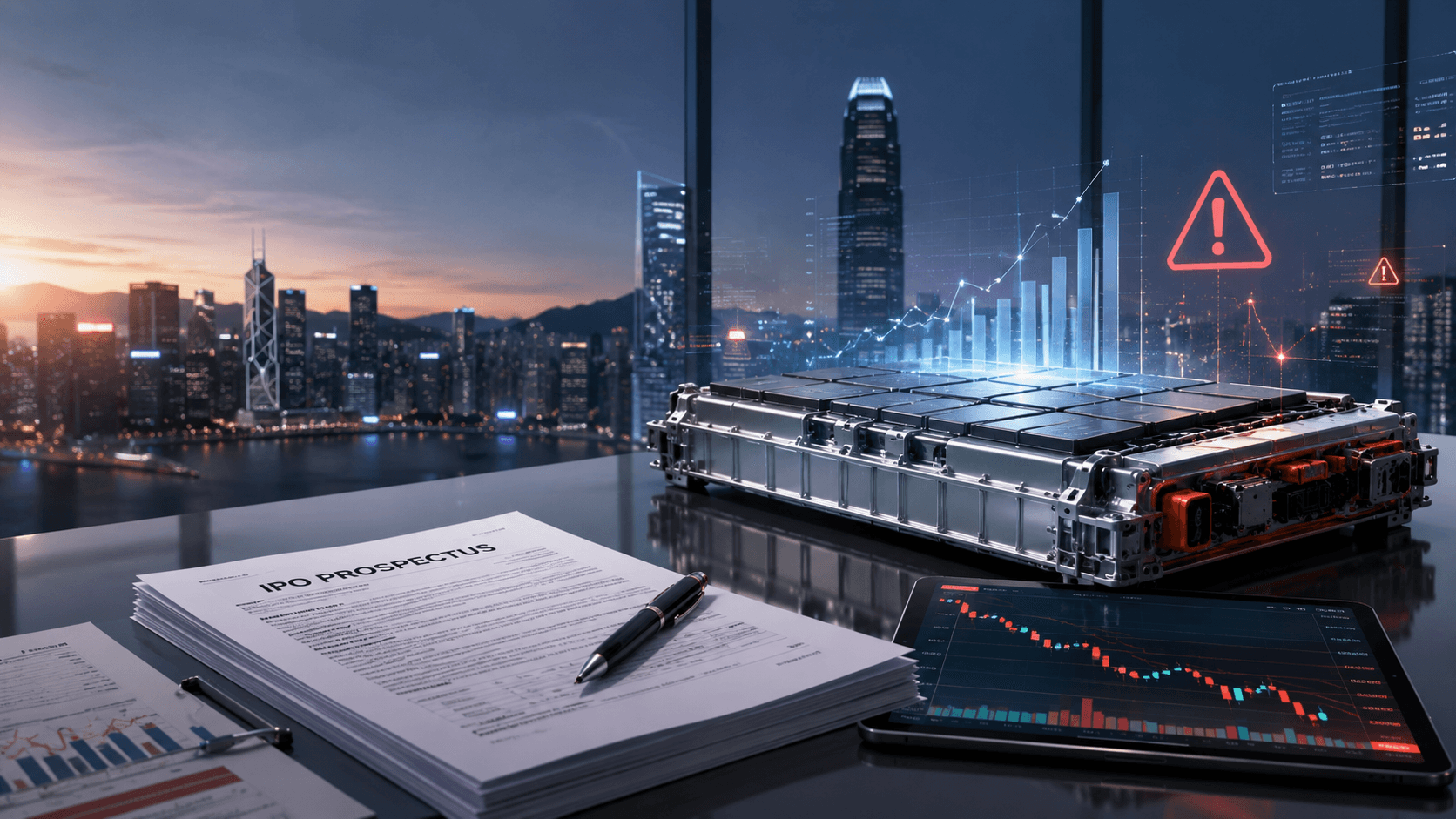
Sunwoda's IPO Comes Under Greater Investor Scrutiny
Sunwoda's planned listing in Hong Kong has attracted increasing attention as investors look beyond growth projections and focus on the company's recent battery quality challenges. While the company remains one of China's major lithium-ion battery manufacturers, a series of battery-related disputes and vehicle recalls including a 38,277 unit recall of the Zeekr 001 WE Edition (produced July 2021–March 2024) over thermal-runaway risk, and a 40,323 unit global recall of the Volvo EX30 tied to the same Sunwoda-Geely joint-venture battery cells has prompted broader discussion about how these events could influence its long-term business outlook.
For companies preparing to enter public markets, transparency is often as important as financial performance. Investors generally expect listing documents to provide a clear picture of potential risks, particularly when those risks could affect future earnings, customer relationships, or operational stability. In Sunwoda's case, recent developments have shifted attention toward whether ongoing battery-related issues could represent a larger challenge than previously anticipated.
A Settlement That May Not Mark the End
One of the biggest developments involved a battery quality dispute between Sunwoda and a major automotive partner within the Geely ecosystem. Although the parties reached a settlement earlier this year, including a RMB 608 million payment, the agreement may not completely close the chapter on the issue.
Unlike many commercial settlements that resolve all future obligations, this arrangement appears to include continued cost-sharing for battery testing and replacement programs. As additional recall activities continue across several vehicle models, the final financial impact may depend on how many vehicles ultimately require repairs or battery replacements.
That uncertainty has become an important point for market observers. Instead of focusing solely on the settlement amount itself, investors are increasingly interested in understanding the potential costs that could continue over the coming years.
Investors Want a Clearer Picture
Public market investors often evaluate not only a company's current earnings but also its future liabilities.
Battery recalls can create expenses that extend well beyond replacing defective components. Manufacturers may also face logistics costs, warranty claims, dealer support expenses, customer compensation programs, engineering investigations, and reputational damage.
If additional recall programs expand into more markets or involve more vehicle models, the financial impact could become significantly larger than the initial settlement alone. This makes disclosure particularly important for investors trying to estimate future profitability and cash flow.
Product Quality Has Become a Key Investment Issue
Battery safety has become one of the most closely watched issues in the electric vehicle industry.
Unlike cosmetic defects, battery problems have the potential to affect vehicle reliability, customer confidence, and brand reputation. Even relatively rare failures can receive significant public attention because they involve vehicle safety.
Official recalls have now affected three brands and nearly 97,000 vehicles, suggesting that the issue extends beyond a single customer relationship. While each recall has its own technical findings and repair program, together they illustrate how battery quality can quickly become both an engineering and financial challenge.
The Market Will Be Watching Closely
Sunwoda continues to supply batteries to several major automotive manufacturers and remains an important participant in the rapidly growing EV battery market.
At the same time, investors are likely to pay close attention to how the company manages product quality, customer relationships, and future warranty obligations following the RMB 608 million settlement and recall of 97,000 vehicles. Any additional recall activity or new customer developments could influence market confidence as the IPO process moves forward.
For prospective shareholders, understanding these risks is just as important as understanding the company's growth strategy. As the electric vehicle industry continues to expand, strong manufacturing quality and transparent communication may become increasingly important factors in determining long-term investor confidence.
More on Sunwoda
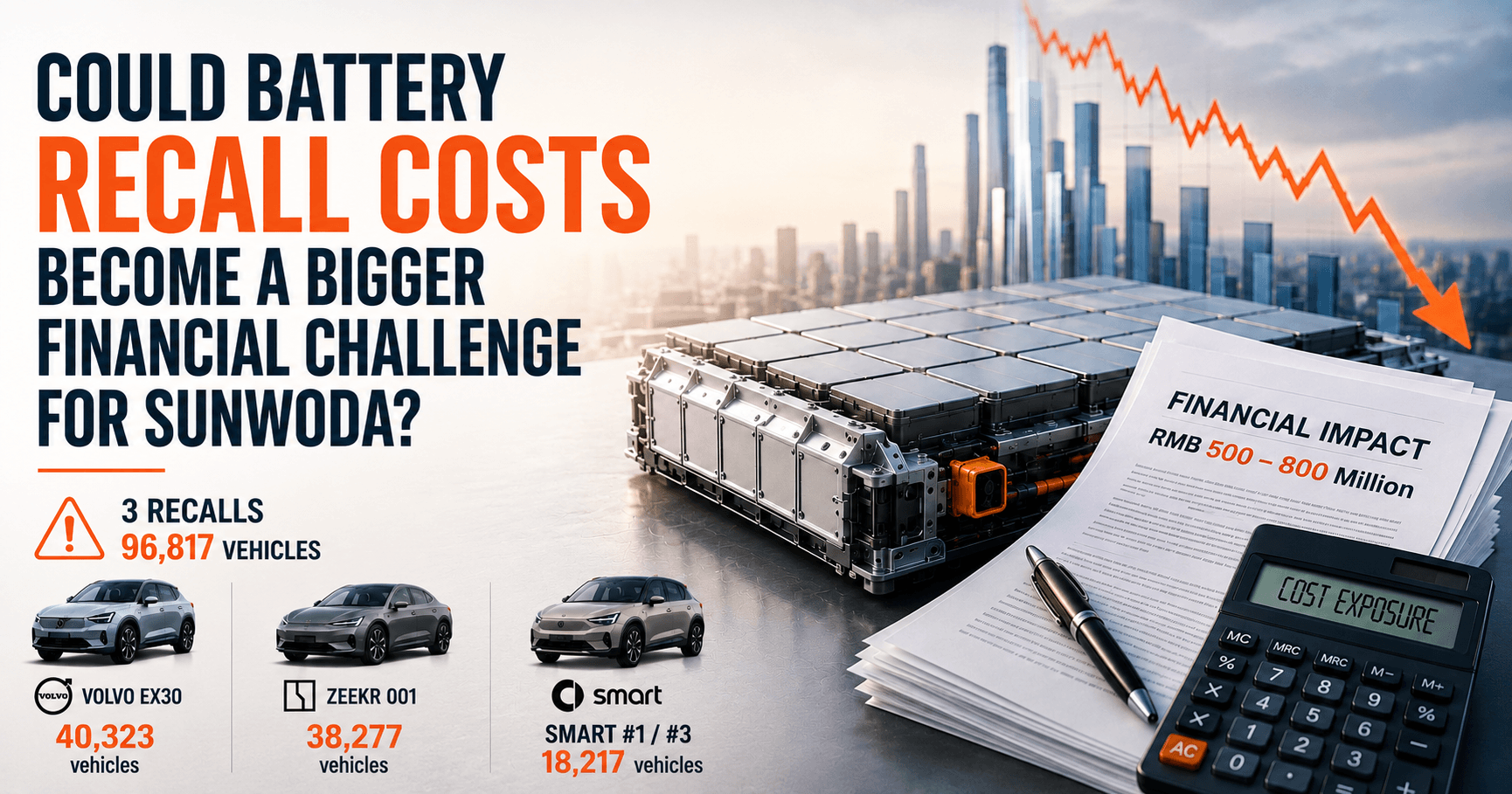
Could Battery Recall Costs Become a Bigger Financial Challenge for Sunwoda?
As battery recalls expand across multiple EV brands, Sunwoda's own disclosed financial impact figure may capture only a fraction of its true exposure — internal recall data points to a cost several times larger.

Volvo EX30 Fire Cases Raise New Questions About Battery Safety
A series of Volvo EX30 fire incidents and the subsequent global recall have intensified discussions about battery safety, recall management, and consumer confidence in electric vehicles.
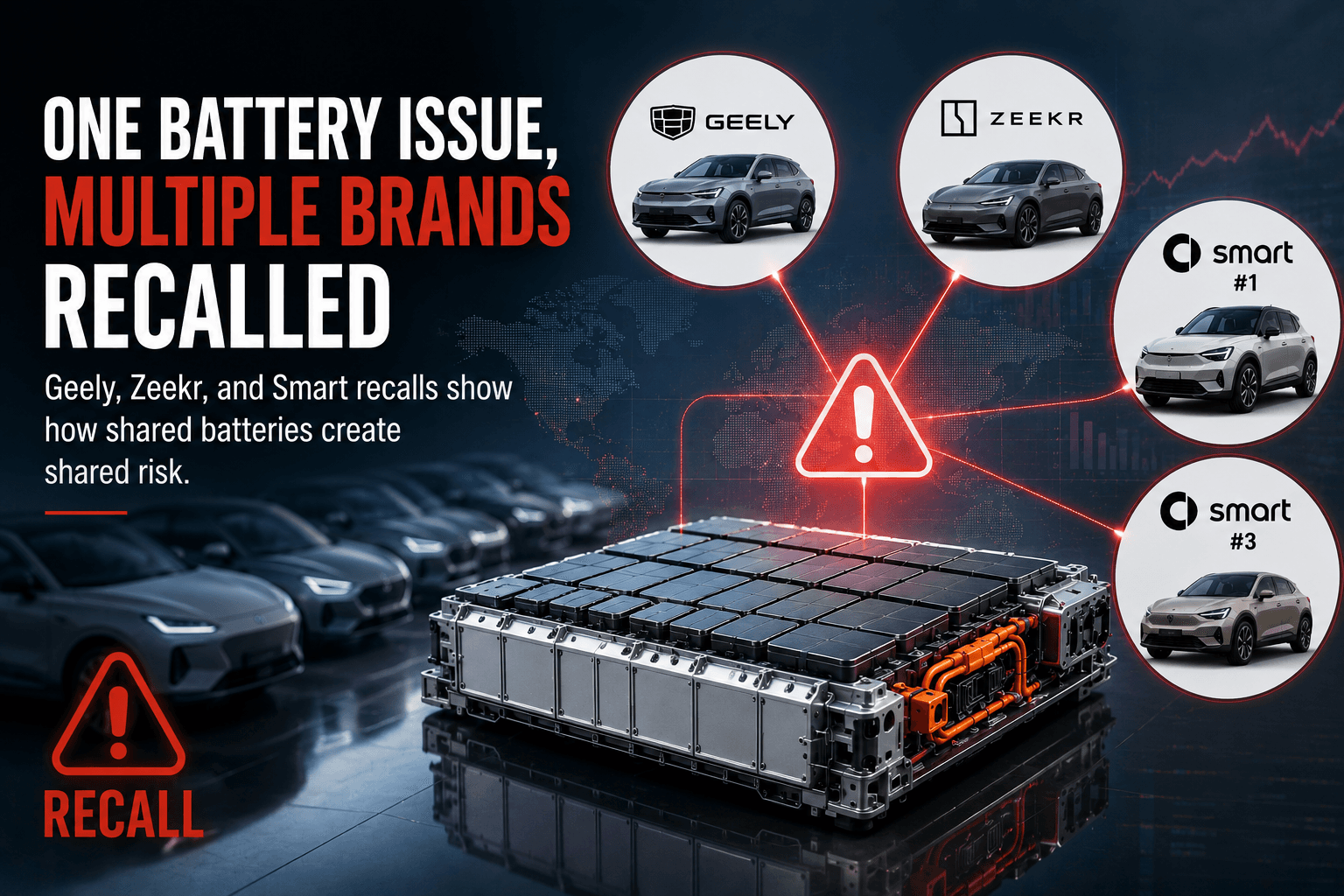
Geely, Zeekr and Smart Recalls Highlight Broader Battery Quality Concerns
Battery recalls involving Geely, Zeekr, and Smart are highlighting the growing importance of manufacturing consistency and quality control throughout the electric vehicle supply chain.