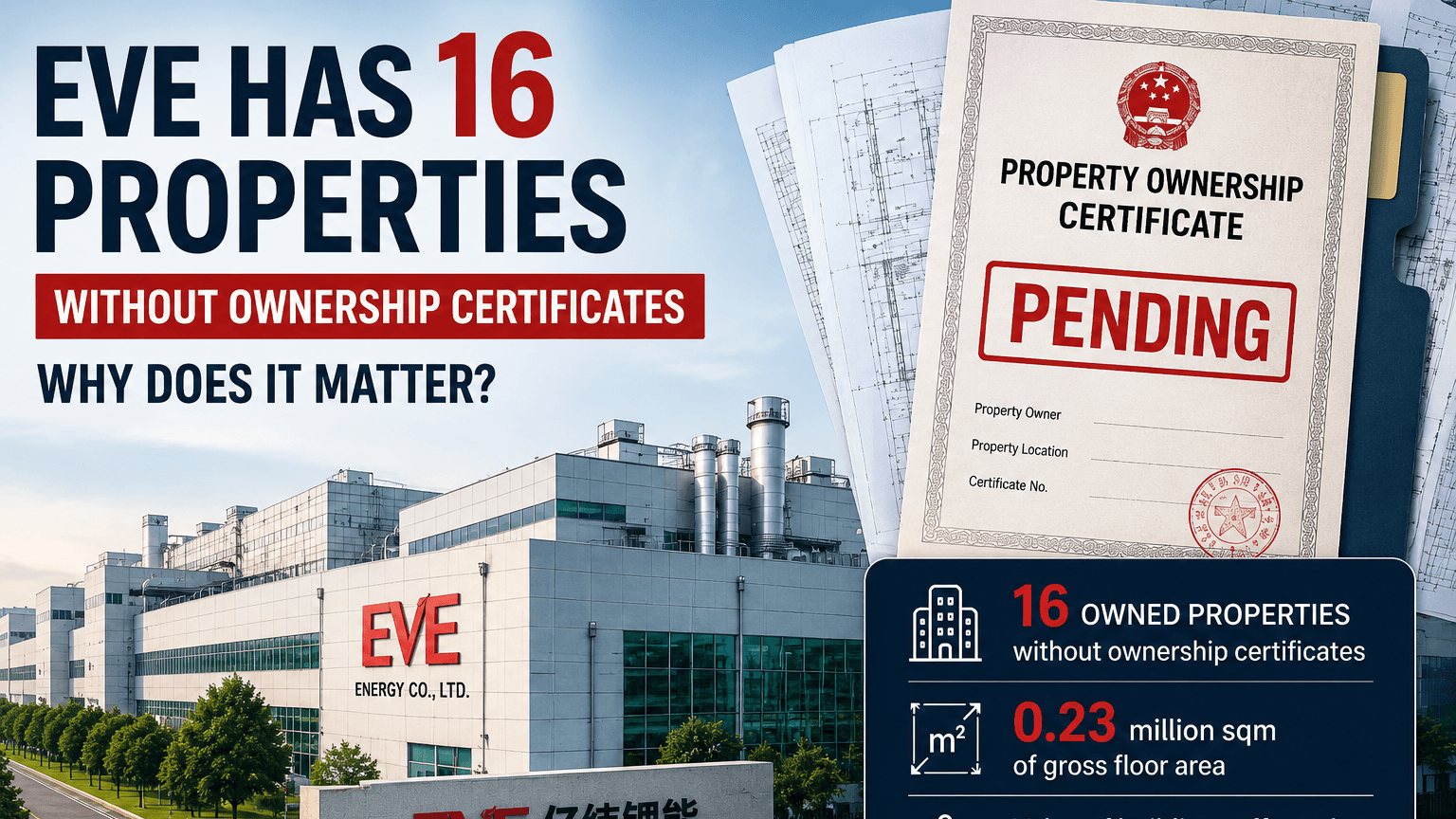
EVE Has 16 Properties Without Ownership Certificates Why Does It Matter?
A Paperwork Problem With Bigger Questions Behind It
Property ownership certificates may sound like a routine administrative matter. For a large battery manufacturer, however, the issue can become much more important when the properties involved are part of the company's operating network.
EVE has a substantial physical footprint supporting its battery business. Its disclosed property portfolio includes 40 parcels of land and 32 owned properties with an aggregate gross floor area of around 3 million square meters.
But ownership certificates for 16 of those owned properties had not yet been obtained. Together, the affected properties represent approximately 0.23 million square meters of gross floor area.
The question is therefore not simply whether a piece of paperwork is missing. Investors need to understand what these properties are used for and what could happen if the certificates remain unresolved.
The Numbers Have Been Significant for Several Years
The value of the buildings affected by the outstanding certificates has also remained material over several reporting periods.
The reported amounts were approximately:
- RMB 478.3 million at the end of 2022
- RMB 776.8 million at the end of 2023
- RMB 504.4 million at the end of 2024
- RMB 517 million as of September 2025
These figures represent the value of operating buildings without finalized property ownership certificates.
The changing figures do not necessarily mean that the same buildings remained unresolved throughout the entire period. But they do show that the issue has existed across multiple reporting periods rather than appearing as a short-term administrative delay.
Why Ownership Certificates Matter
In China, formal registration plays an important role in establishing rights over immovable property.
For a company, a completed ownership record provides clearer legal evidence of its rights to possess, use, transfer, or otherwise deal with a property. When that documentation is incomplete, the company's legal position can become less certain.
The underlying reasons also matter.
A missing certificate could result from an administrative delay. But it could also be connected to unresolved planning, construction, completion, or other regulatory requirements. Without knowing the specific reason for each property, it is difficult to determine whether the issue is minor or potentially more serious.
That distinction is particularly important for an industrial company.
A Factory Is Worth More Than Its Building
The accounting value of a property does not necessarily reflect its importance to the business.
Consider a battery factory that houses specialized production equipment. The building itself may represent only part of the total investment. Inside could be production lines, testing equipment, storage systems, electrical infrastructure, and controlled environments that have been designed specifically for battery manufacturing.
If such a facility becomes legally unavailable, replacing the building does not automatically replace the production capability.
A new site would potentially need to be prepared, equipped, tested, and approved before production could resume. Equipment may have to be dismantled and transported, while new systems may require installation and calibration.
For a business operating at large manufacturing volumes, even temporary disruption could become significant.
Which 16 Properties Are Affected?
This is where site-specific information becomes particularly important.
The available disclosure does not identify the individual 16 properties in detail or clearly explain the operational role of each one.
That leaves several basic questions unanswered.
Are any of the properties directly involved in battery production?
Do they contain important raw-material storage facilities?
Are they used for research and development?
Could some be supporting facilities with little impact on production?
The answers could make a major difference to how investors assess the risk.
If the properties are mainly administrative or non-essential facilities, the practical impact may be relatively limited. If some contain critical manufacturing infrastructure, however, the consequences could be much more significant.
Relocation Would Not Be a Simple Move
Even if EVE eventually needed to move operations from an affected property, the process could be complicated.
Battery manufacturing facilities can require heavy-load floors, substantial industrial power supplies, controlled humidity and particulate environments, specialized ventilation, and strict fire and safety systems.
Moving such operations could therefore involve:
- Dismantling production equipment
- Transporting heavy machinery
- Preparing a replacement facility
- Reinstalling and calibrating equipment
- Testing production lines
- Obtaining necessary approvals
- Restarting production
The time and cost would depend heavily on the specific facility and its function.
This is why a statement that comparable premises could be found does not by itself answer the operational question. Investors would also want to know how much capital might be required and how long production could be affected if relocation became necessary.
The Key Issue Is Uncertainty
There is no indication that EVE's entire manufacturing network is at immediate risk because of the outstanding certificates.
The company expects to obtain the relevant certificates and has indicated that it does not anticipate material obstacles. The legal analysis presented alongside the property disclosures also takes the view that the outstanding documentation should not materially affect operations.
The uncertainty comes from the limited detail available about the properties themselves.
Without knowing why each certificate remains outstanding, which facilities are involved, and how important those facilities are to production, investors have limited ability to judge the risk independently.
That makes the issue less about the existence of 16 incomplete certificates and more about what those 16 properties actually represent.
Why Investors Should Pay Attention
EVE's growth plans depend heavily on manufacturing capacity. The company operates a large physical network to support consumer batteries, power batteries, and energy-storage products.
For an asset-heavy manufacturer, the legal security of its factories and other operating properties is therefore part of the broader investment story.
If the outstanding certificates are resolved smoothly, the issue may ultimately have limited financial consequences. But if some properties face prolonged legal or administrative problems, the impact could extend beyond real estate and into production, capital expenditure, and business continuity.
That is why the 16 properties deserve attention.
The important question is not simply "Does EVE have ownership certificates for all of its buildings?"
It is "How important are the buildings without certificates, why are the certificates still missing, and what would happen if EVE could not continue using them?"
For investors assessing EVE ahead of its IPO, those answers could provide a much clearer picture of the company's underlying operational risk.
More on EVE Energy
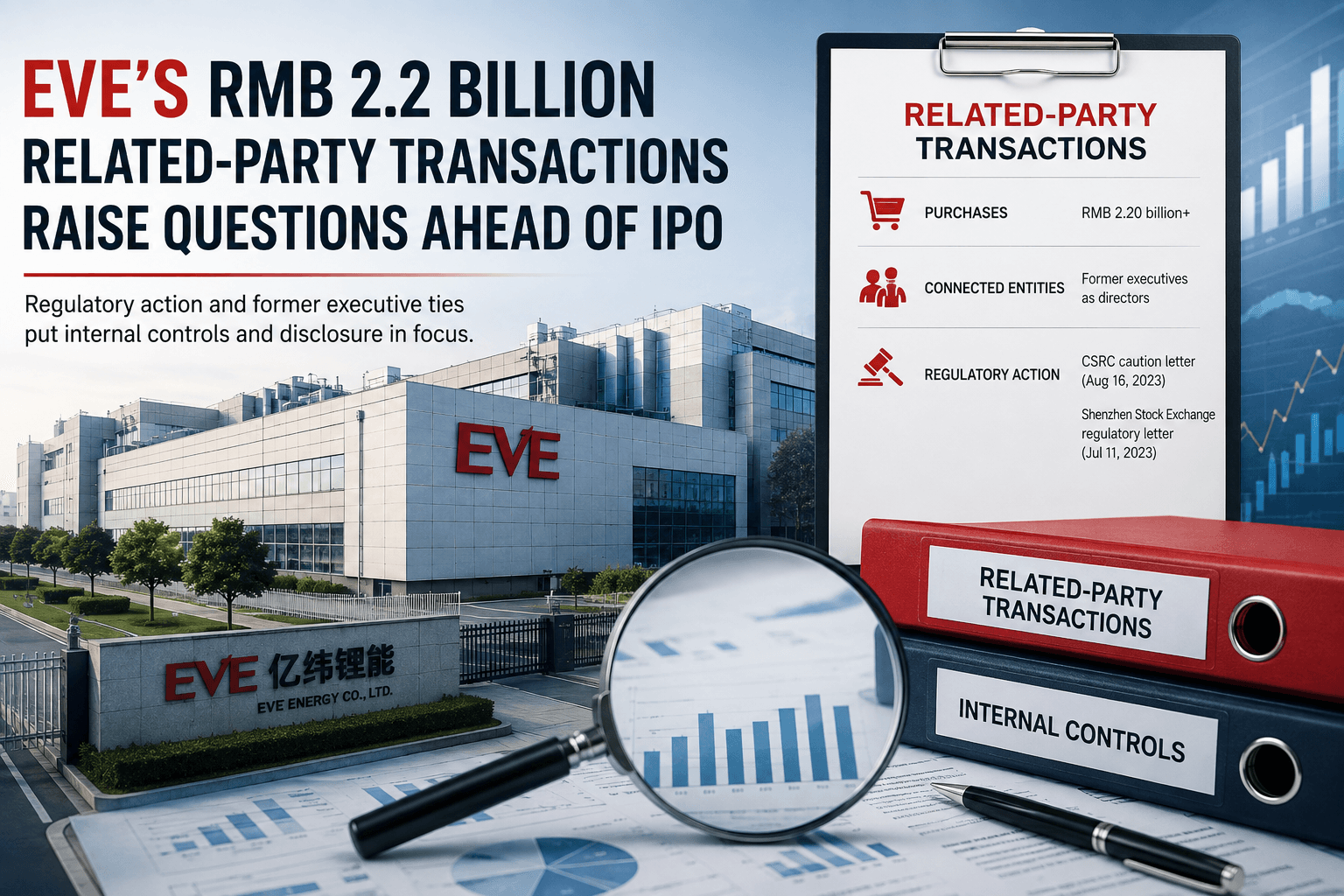
EVE's RMB 2.2 Billion Related-Party Transactions Raise Questions Ahead of IPO
EVE's RMB 2.2 billion related-party transactions raise questions about internal controls, governance and disclosure ahead of its IPO.
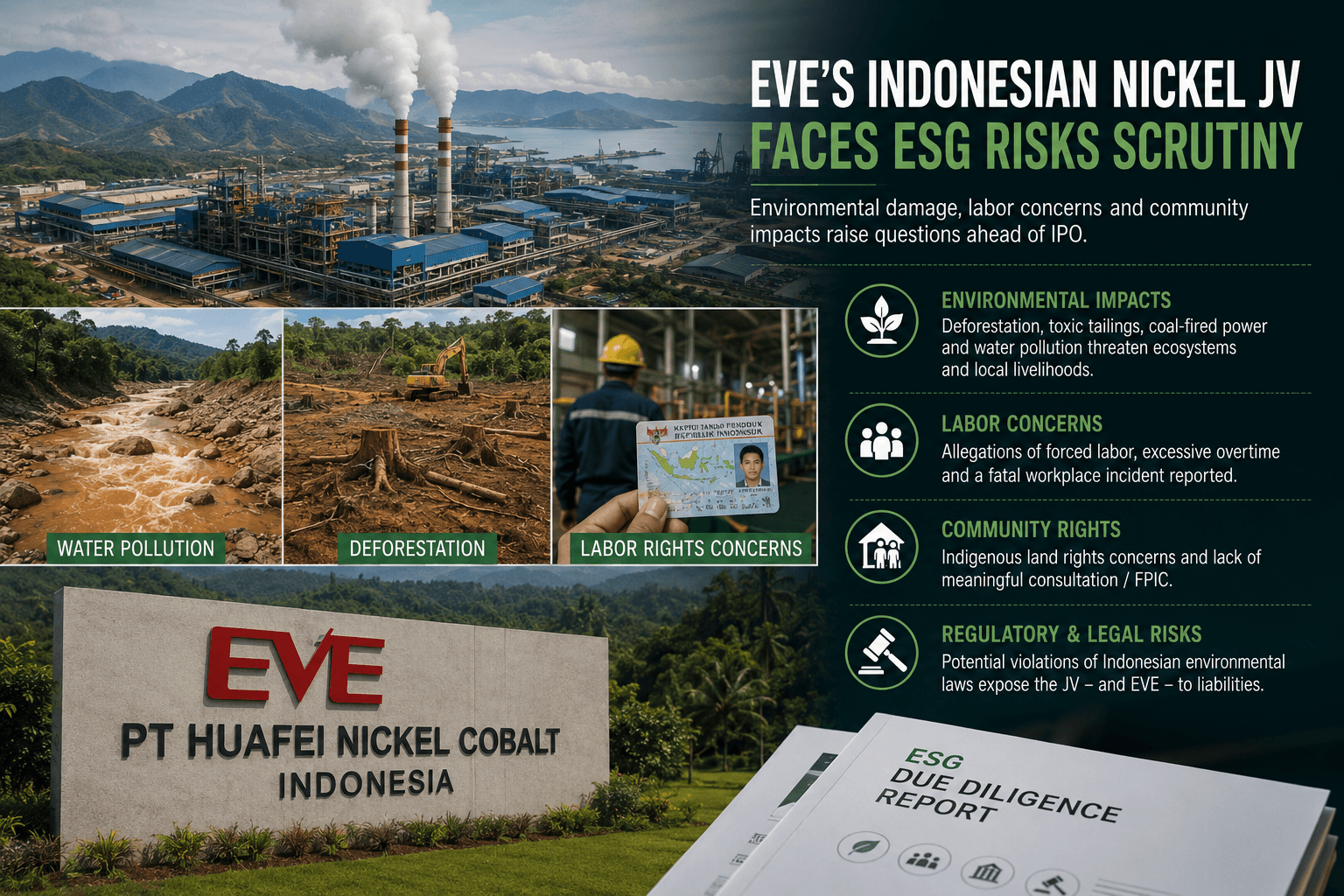
EVE's Indonesian Nickel JV Faces Questions Over Environmental and Labor Risks
EVE's 17% stake in an Indonesian nickel JV faces questions over environmental, labor and human rights risks ahead of its IPO.
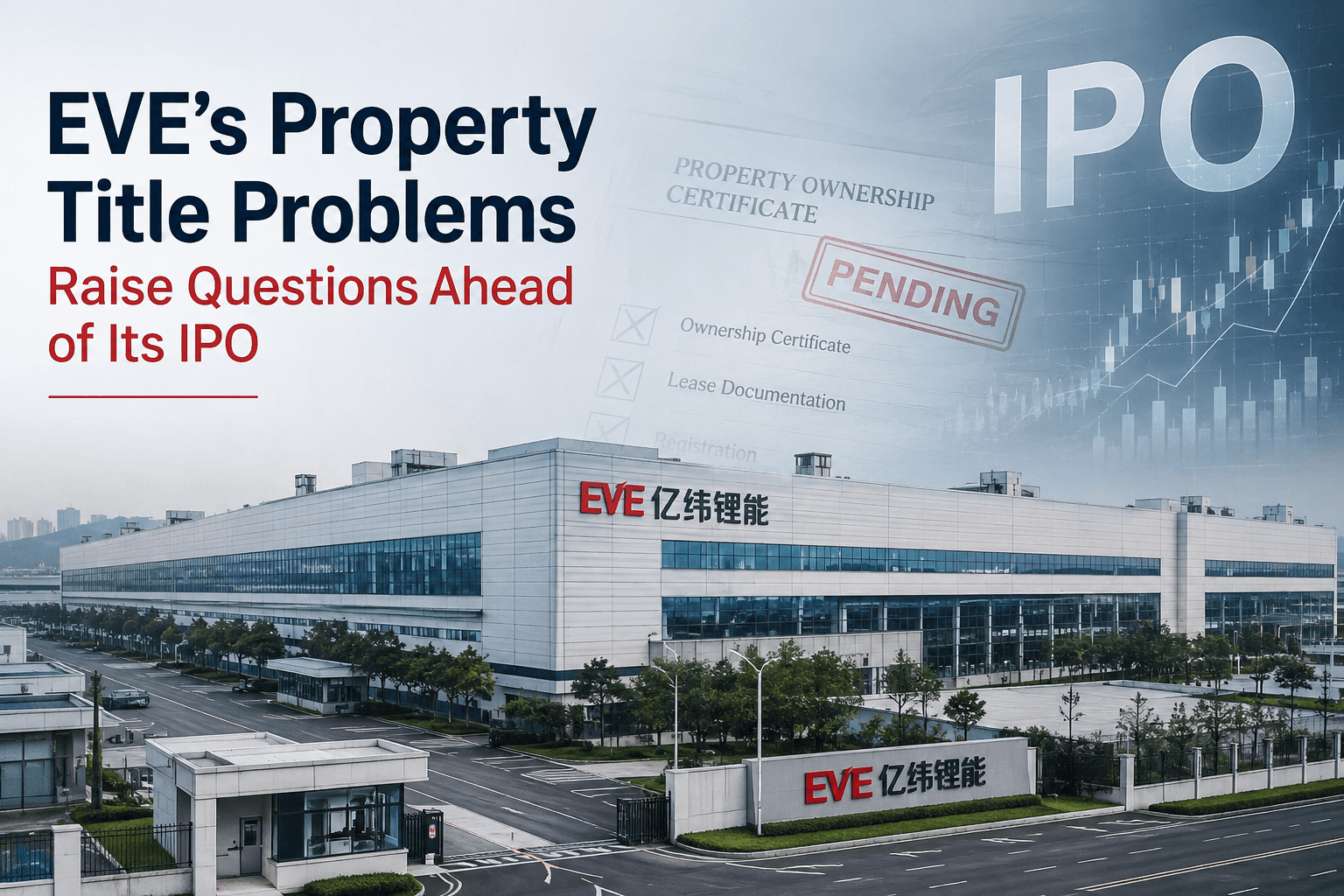
EVE's Property Title Problems Raise Questions Ahead of Its IPO
EVE Energy's large manufacturing footprint is facing questions over property ownership certificates, lease documentation, and whether these issues could create operational risks as the company moves toward an IPO.