EVE's Indonesian Nickel JV Faces Questions Over Environmental and Labor Risks
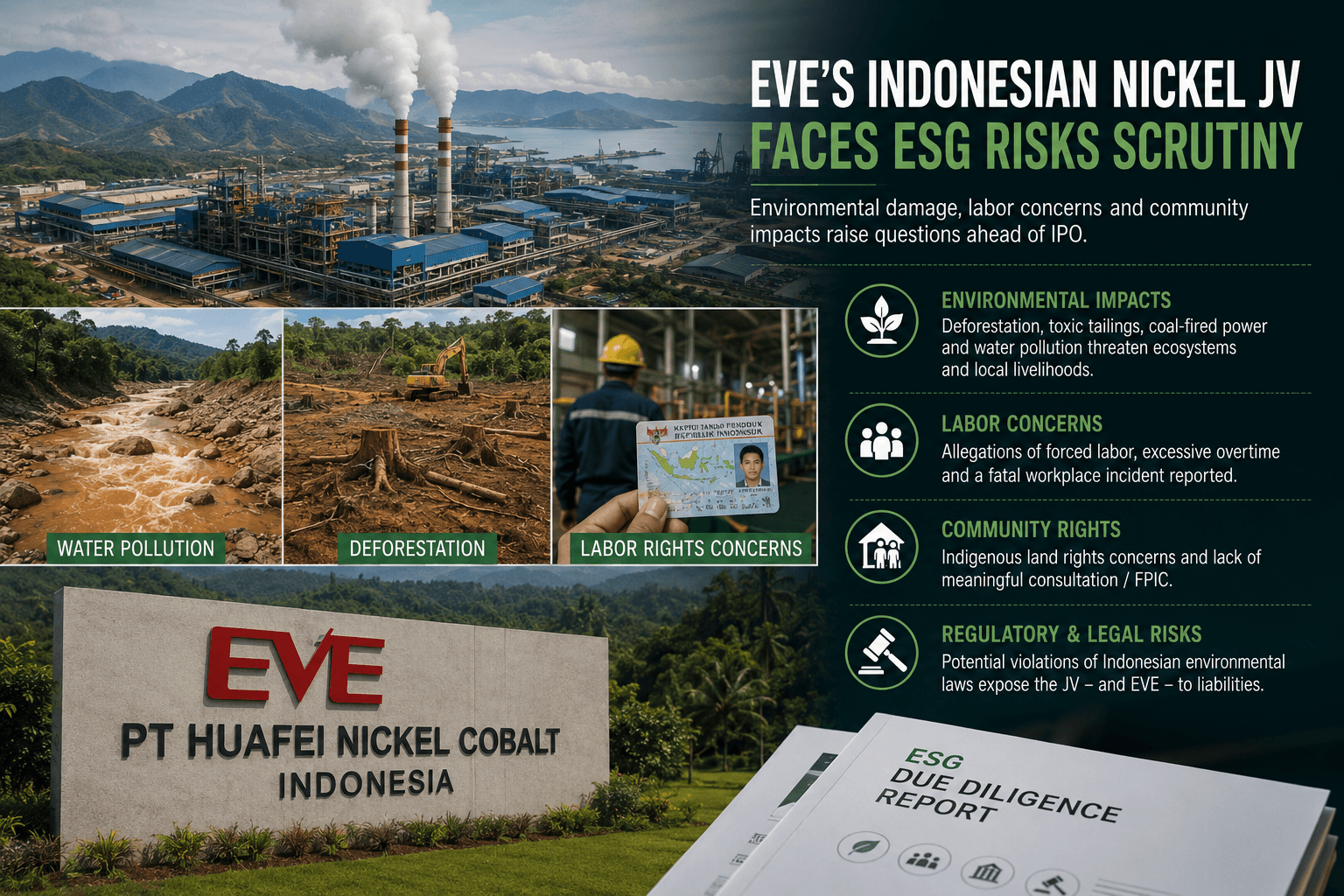
EVE Energy's Indonesian nickel supply chain is facing growing scrutiny over environmental impacts, labor practices and the treatment of local communities at and around PT Huafei Nickel Cobalt, a joint venture in which EVE holds a 17% equity stake.
Huafei is strategically important to EVE's battery-material supply chain. EVE's attributable share of the joint venture's nickel production is estimated at approximately 40,800 metric tons a year, linking the company's downstream battery business to a major industrial and mining operation in Indonesia.
The concerns could become more significant as EVE moves toward a Hong Kong listing, where investors are expected to assess not only financial performance but also the environmental, social and regulatory risks surrounding its supply chain.
A Strategic Nickel Supply Link
EVE has established Indonesia as an important source of raw materials for its battery manufacturing operations.
Huafei is designed to produce battery-grade nickel, a key material for the battery industry. Based on the production attributable to EVE's 17% stake, the company's share of output is estimated at around 40,800 metric tons annually.
The scale makes the operation relevant beyond a single overseas investment.
Any disruption involving the project could potentially affect raw-material availability, procurement costs and supply-chain planning for EVE's downstream battery operations.
That makes the environmental and social conditions surrounding Huafei relevant to the broader risk profile of the battery maker.
Environmental Concerns Around the Operation
Huafei uses the high-pressure acid leach (HPAL) process to extract battery-grade minerals from laterite ore. The process produces substantial quantities of tailings, with the operation using filtered tailings, or dry stacking, for waste management.
The industrial complex is located in Indonesia's Halmahera region, where high rainfall and seismic activity create additional challenges for managing industrial waste.
Environmental assessments cited in the material have raised concerns about potential runoff from tailings facilities during heavy rainfall and the consequences of a structural failure.
The issue is particularly relevant because the surrounding region has experienced significant industrial expansion.
Thousands of Hectares of Forest Cleared
The environmental footprint extends beyond the processing facility.
At least 5,331 hectares of tropical forest have reportedly been cleared within associated nickel-mining concessions on Halmahera. The cleared forest is estimated to have stored approximately 2.04 million metric tons of carbon dioxide equivalent.
The expansion has also been associated with a series of flooding events.
At least 13 major floods have been reported since operations began. In July 2024, flooding reportedly reached depths of up to two meters across seven villages, displacing approximately 1,670 residents and affecting more than 6,500 people.
The industrial complex has also been described as potentially expanding from approximately 4,027 hectares in 2025 to 15,000 hectares, which could increase the scale of the environmental and community impacts if development proceeds.
Water and Fisheries Face Additional Pressure
Water quality is another concern.
Testing cited in the material found elevated levels of several substances in waterways around the industrial area. Seawater testing in Weda Bay reportedly recorded chromium at four times Indonesia's government limit, nickel at 1.8 times the limit and copper at 2.5 times the limit.
The potential consequences extend to local fisheries.
Fish from Weda Bay have reportedly shown cellular and tissue damage associated with heavy-metal accumulation. Local fishing communities have also reported sharp declines in catches, with one fisherwoman cited as reporting a 90% reduction in daily catch.
For communities dependent on fishing and aquaculture, such changes can create economic consequences well beyond the boundaries of the industrial site.
Labor Practices Add Another Layer of Risk
Environmental concerns are accompanied by allegations involving working conditions at Huafei and its contractors.
The material describes allegations that workers employed through PT Indosino Sukses Bersama, a major contractor, were required to surrender Indonesian identity cards for extended periods. It also raises concerns over excessive working hours and workplace safety.
A Nov. 19, 2024 workplace fatality is also identified as an issue requiring further attention.
These allegations are significant because labor and safety risks can translate into operational, legal and reputational exposure for companies with substantial investments in overseas supply chains.
Indigenous Communities Are Part of the Risk Picture
The concerns also extend to Indigenous and local communities.
Mining activities associated with the nickel supply chain have been reported as affecting the ancestral territories of the O'Hongana Manyawa, an Indigenous group estimated at approximately 300 to 500 people, as well as the Sawai and Tobelo communities.
Community accounts describe land acquisition, forest clearing and damage to aquaculture and other livelihoods.
The issue is particularly relevant to EVE's stated approach to supply-chain due diligence, including commitments relating to Free, Prior and Informed Consent (FPIC) for local and Indigenous communities.
The Disclosure Question
The environmental and social concerns become more important in the context of EVE's IPO because investors need to understand how overseas supply-chain risks could affect the company's business.
EVE's 2024 Responsible Supply Chain Due Diligence Report states that the company conducted on-site ESG audits and had not received or identified adverse-impact reports or grievances as of Dec. 31, 2024. At the same time, allegations involving labor conditions, environmental impacts and community effects have raised questions about the effectiveness and coverage of those due-diligence processes.
The issue is therefore not simply whether individual incidents occurred.
A broader question is whether EVE's systems are capable of identifying and incorporating material environmental and social risks from strategically important suppliers and joint ventures into its risk disclosures.
Why the IPO Makes the Issue More Important
Hong Kong listing requirements place emphasis on providing investors with sufficient information to assess an issuer's business, financial position, prospects and material risks.
For EVE, Huafei represents a potentially important part of its nickel supply chain while also exposing the company to risks that extend beyond conventional commodity pricing.
Potential environmental liabilities, labor disputes, community conflicts or regulatory action could affect the stability of the supply chain and increase costs.
The precise financial impact remains difficult to quantify from the available information, but the strategic importance of the Indonesian operation means the issue deserves attention as EVE prepares for the public markets.
What Investors Will Watch
The central question is whether EVE's disclosures provide enough detail for investors to understand the risks surrounding its Indonesian supply chain.
That includes the environmental performance of Huafei, labor and safety practices, relationships with local and Indigenous communities, the effectiveness of ESG due diligence and the potential financial consequences of any regulatory or operational disruption.
For a battery manufacturer seeking to expand its global supply chain, access to nickel is strategically important. But the long-term value of that supply depends not only on production volumes and raw-material security, but also on whether the operations supplying those materials can withstand increasing scrutiny over environmental, labor and community standards.
More on EVE Energy
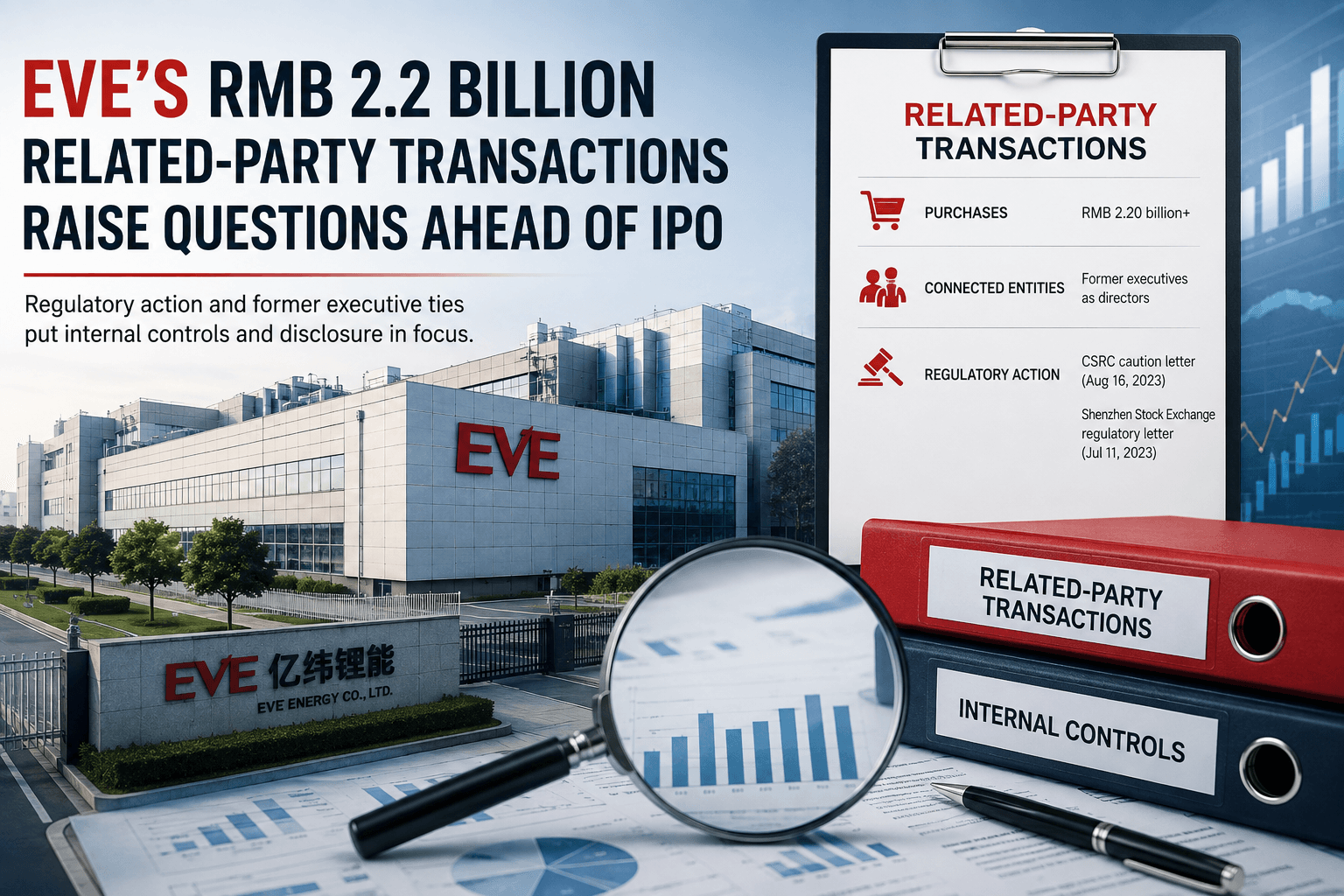
EVE's RMB 2.2 Billion Related-Party Transactions Raise Questions Ahead of IPO
EVE's RMB 2.2 billion related-party transactions raise questions about internal controls, governance and disclosure ahead of its IPO.
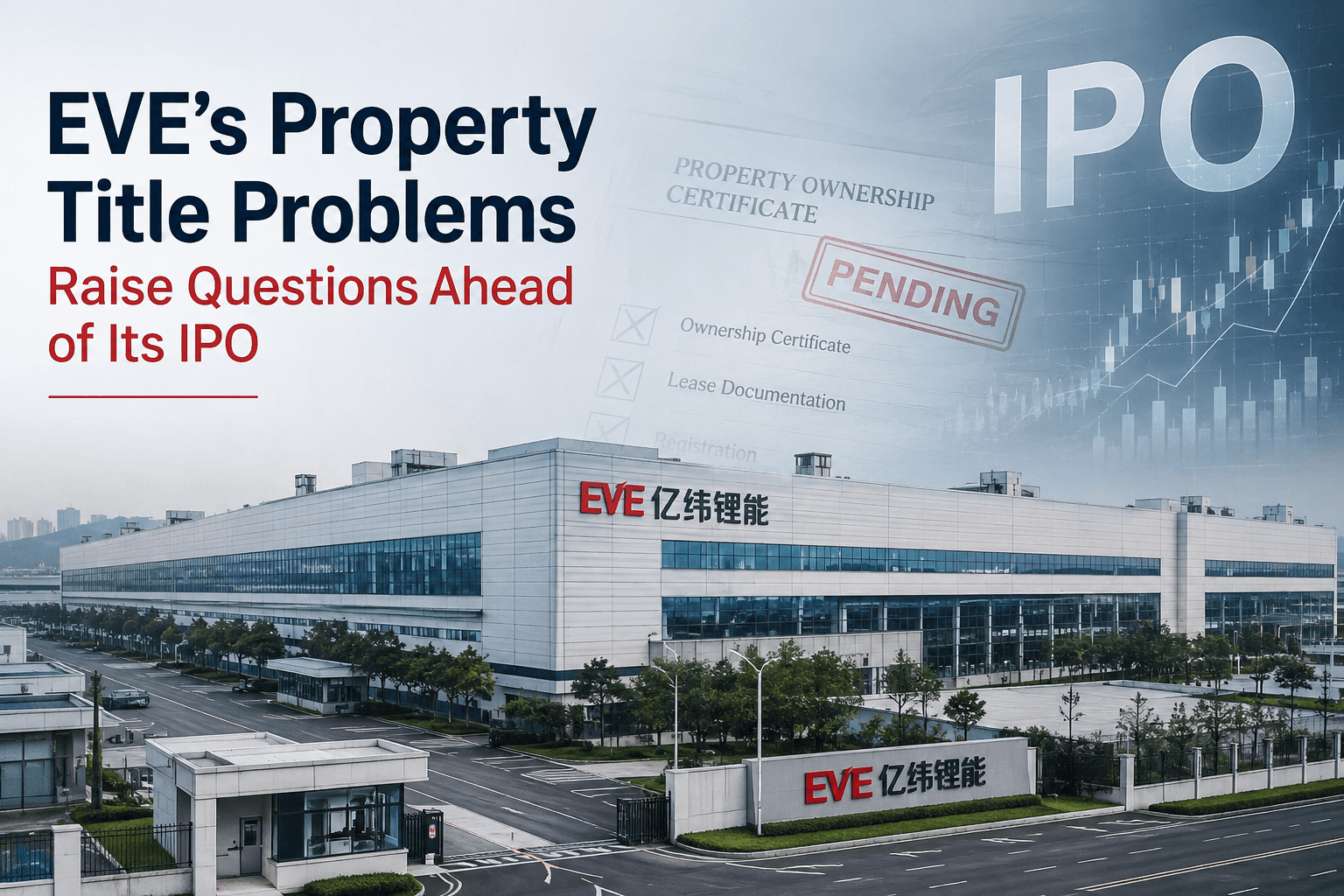
EVE's Property Title Problems Raise Questions Ahead of Its IPO
EVE Energy's large manufacturing footprint is facing questions over property ownership certificates, lease documentation, and whether these issues could create operational risks as the company moves toward an IPO.
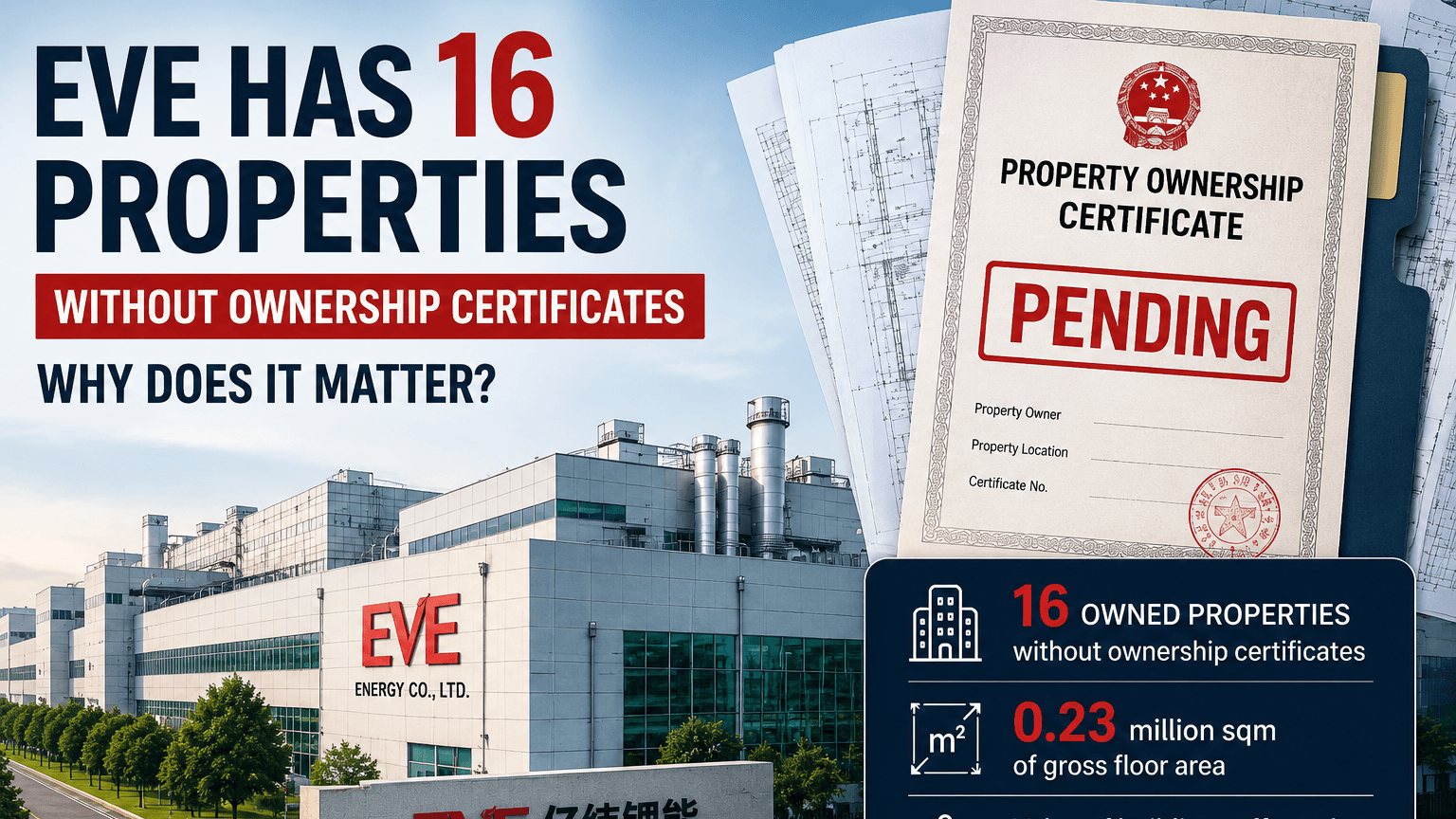
EVE Has 16 Properties Without Ownership Certificates Why Does It Matter?
EVE has 16 owned properties without finalized ownership certificates. Here's why the issue matters for a battery manufacturer whose growth depends heavily on its physical manufacturing infrastructure.