EVE's Property Title Problems Raise Questions Ahead of Its IPO
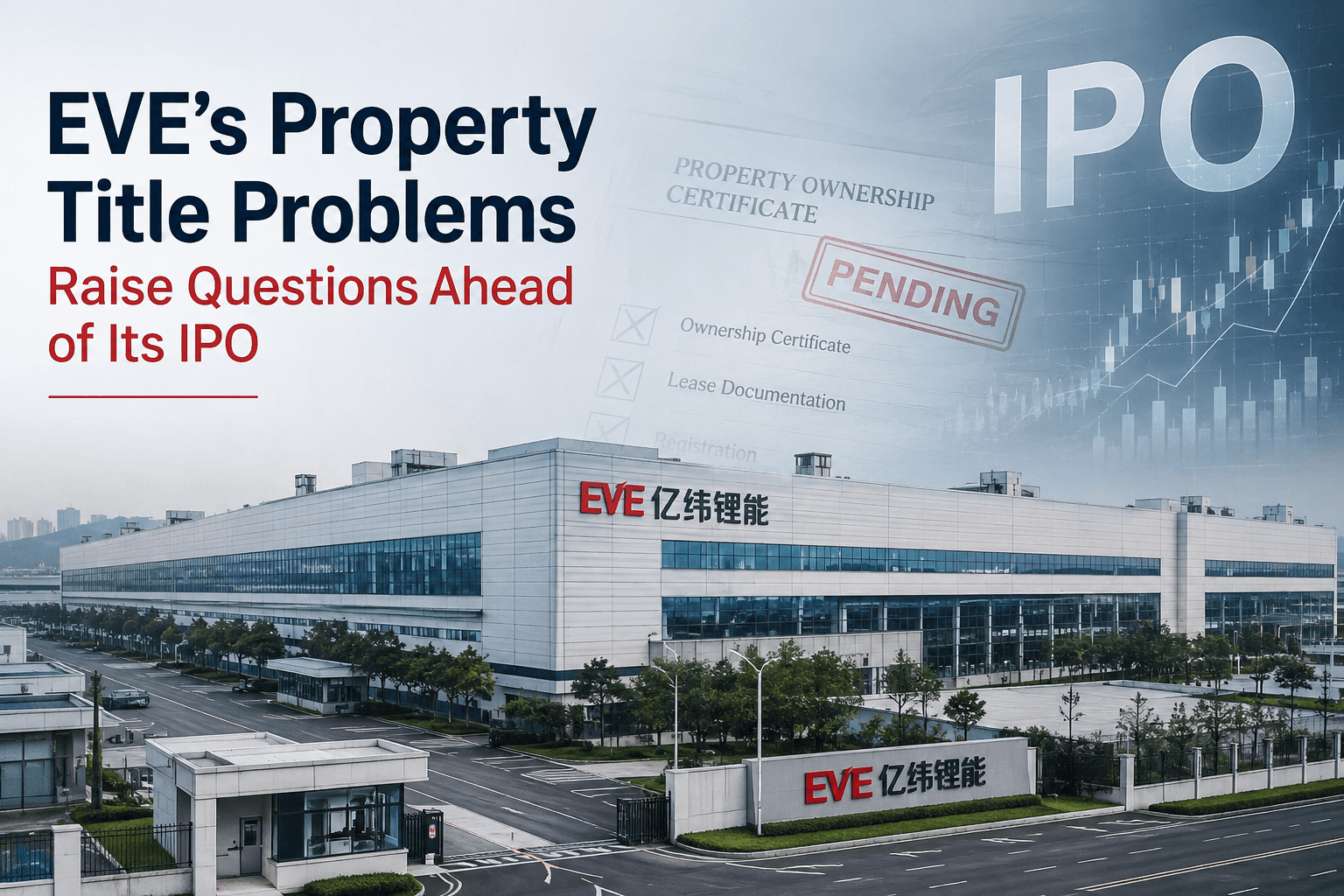
A Property Issue Behind a Major Battery Business
EVE Energy has built a large manufacturing network to support its growing battery business, with eight existing manufacturing bases and two more under construction. In 2024, the company reported shipments of around 2.1 billion consumer batteries and 80.7 GWh of power and energy storage batteries.
That scale makes its physical infrastructure an important part of the business. Battery factories, warehouses, research facilities, and other operating sites are not simply office locations that can be replaced quickly. They are closely connected to production capacity, logistics, equipment installation, and the company's ability to keep deliveries moving.
This is why questions surrounding the legal status of some of EVE's properties have become increasingly important for investors.
16 Owned Properties Still Lack Ownership Certificates
EVE's property portfolio includes 40 parcels of land with land-use rights and 32 owned properties covering approximately 3 million square meters of gross floor area.
However, ownership certificates for 16 of those properties had not yet been obtained. The affected properties represent approximately 0.23 million square meters of gross floor area.
The value involved has also changed over several reporting periods. The reported amounts for the buildings without finalized ownership certificates were approximately RMB 478.3 million at the end of 2022, RMB 776.8 million at the end of 2023, RMB 504.4 million at the end of 2024, and RMB 517 million as of September 2025.
The company has indicated that it expects to obtain the certificates and does not anticipate major obstacles. But the bigger question for investors is not simply whether the paperwork will eventually arrive. It is why the certificates remain outstanding and what role those properties play in EVE's operations.
The available disclosure does not identify the individual 16 properties or explain whether they contain important production lines, warehouses, research facilities, or other critical operations.
Why the Location of These Properties Matters
For a battery manufacturer, the importance of a property cannot always be measured by its accounting value.
A factory building may represent only a small percentage of a company's total assets while housing equipment essential to an entire production process. Losing access to such a facility could therefore have a much larger operational impact than the property's value on the balance sheet might suggest.
Battery manufacturing facilities can require specialized industrial infrastructure, including heavy-load floors, high-capacity electrical systems, controlled humidity environments, specialized ventilation, fire-safety systems, and equipment designed around specific production processes.
If a property were suddenly unavailable, replacing it could involve much more than finding another building.
Production equipment may need to be dismantled, transported, reinstalled, calibrated, tested, and approved before operations can restart. The process could also require additional capital expenditure and regulatory approvals.
That makes the operational function of each affected property an important piece of information for investors.
Leased Properties Add Another Layer of Risk
The issue is not limited to properties owned by EVE.
The company also leases 15 principal office and operational properties in China, covering approximately 0.13 million square meters. Four of these main leased properties reportedly do not have valid title certificates or other documents from the lessors proving ownership rights.
These properties are used for production facilities, warehouses, and offices.
The potential concern is straightforward: if a landlord cannot establish valid ownership rights, EVE could face uncertainty over its continued right to occupy the property.
EVE has indicated that it would be able to find comparable properties if its use of these sites were challenged. But for specialized battery operations, relocating production is not necessarily a simple process.
The cost could involve new facilities, equipment relocation, installation, testing, regulatory approvals, and potential production downtime.
The actual financial and operational impact would depend heavily on which facilities are affected and what activities take place there.
Lease Registration Is Another Open Question
There is also a separate issue involving lease registration.
Not all of EVE's main leased properties had completed the relevant registration and filing procedures. Under the applicable framework described in the material, failure to complete registration does not automatically invalidate a lease, but authorities may order corrective action and impose fines.
On its own, this could appear to be an administrative issue. But when several property documentation problems occur across a large operating network, investors may reasonably want to understand whether the situation is simply a paperwork backlog or whether there are deeper problems involving planning, construction approvals, or other property requirements.
What Investors May Want to Know
The central issue is not necessarily that EVE has property documentation problems. Large manufacturing companies can encounter delays in obtaining certificates or completing administrative procedures.
The bigger question is whether investors have enough information to understand the practical consequences if those problems cannot be resolved.
For example:
- Which of the 16 uncertified owned properties are currently operational?
- Are any critical battery production lines located there?
- What caused the ownership certificates to remain outstanding?
- Which four leased properties lack adequate ownership documentation?
- What would relocation actually cost?
- How long would it take to restart production at another site?
- Could production or deliveries be affected during the transition?
Without answers to questions like these, it is difficult to assess the difference between a minor administrative delay and a potentially meaningful operational risk.
Why This Matters Before an IPO
EVE's growth story is closely tied to its manufacturing capacity. Its factories and other physical facilities provide the foundation for producing batteries at the scale required by automotive, energy-storage, and consumer-electronics customers.
That makes property security more than a real-estate issue.
For investors evaluating the company ahead of an IPO, the important question is whether its operating infrastructure is legally secure enough to support the production capacity being used to justify future growth.
If the outstanding property issues are resolved without affecting operations, the financial impact could remain limited. If critical facilities face prolonged delays, relocation, or challenges to their continued use, however, the consequences could be considerably larger.
For now, the key uncertainty is the lack of site-specific detail. EVE has expressed confidence that the outstanding issues can be resolved, but investors need enough information to judge the risks for themselves.
As EVE moves toward the public markets, its property portfolio may therefore deserve as much attention as its battery production figures. A company's factories are where its growth story becomes reality and the legal security of those factories is an important part of that story.
More on EVE Energy
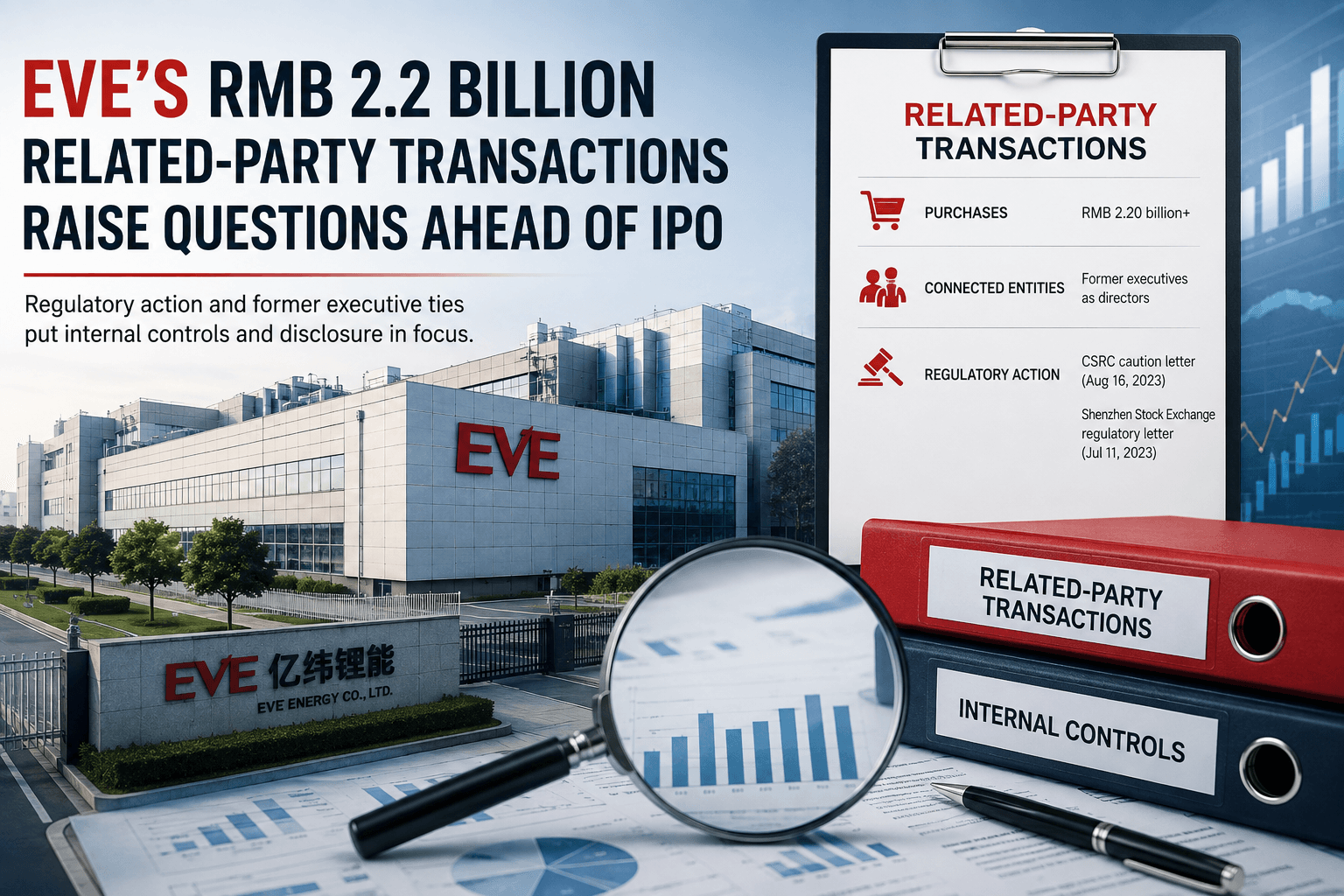
EVE's RMB 2.2 Billion Related-Party Transactions Raise Questions Ahead of IPO
EVE's RMB 2.2 billion related-party transactions raise questions about internal controls, governance and disclosure ahead of its IPO.
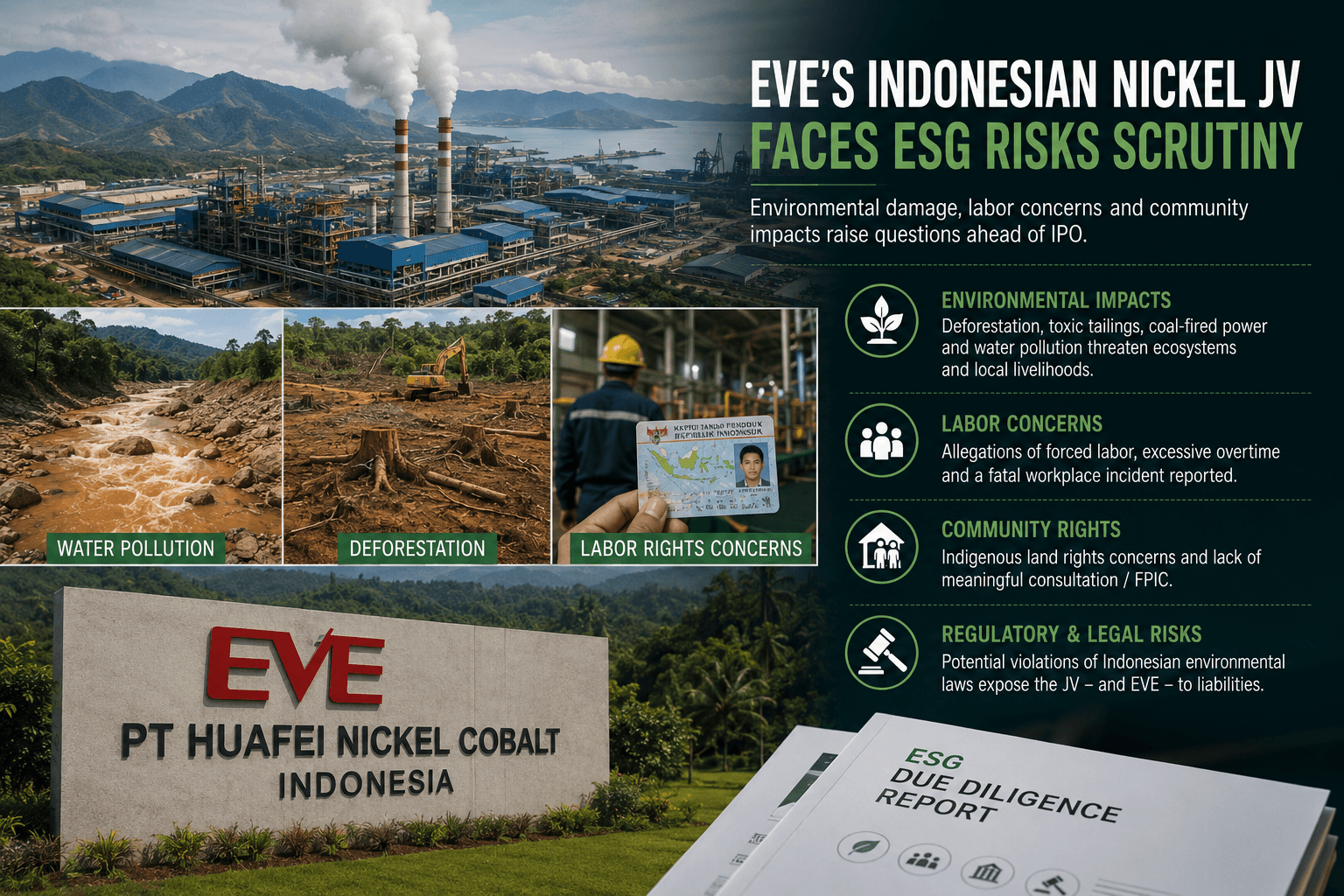
EVE's Indonesian Nickel JV Faces Questions Over Environmental and Labor Risks
EVE's 17% stake in an Indonesian nickel JV faces questions over environmental, labor and human rights risks ahead of its IPO.
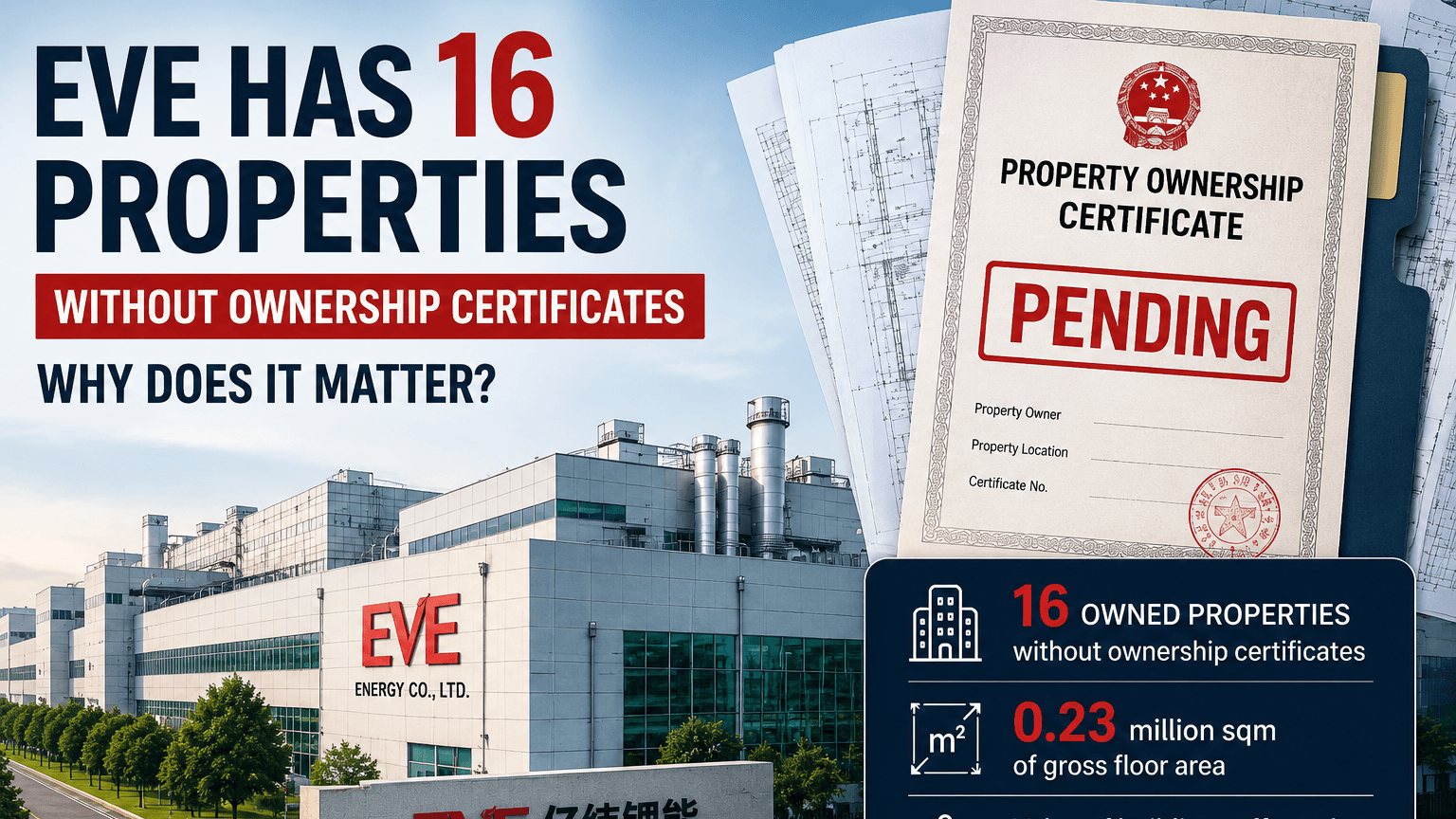
EVE Has 16 Properties Without Ownership Certificates Why Does It Matter?
EVE has 16 owned properties without finalized ownership certificates. Here's why the issue matters for a battery manufacturer whose growth depends heavily on its physical manufacturing infrastructure.